Blog

  • Blockchain Technology Applications: Revolutionizing Trust and Transparency

    Blockchain Technology Applications: Revolutionizing Trust and Transparency

    Introduction

    Blockchain technology, initially popularized as the backbone of cryptocurrencies like Bitcoin, has evolved into a transformative tool with applications far beyond digital currencies. By providing a decentralized, secure, and transparent ledger, blockchain ensures trust without intermediaries, streamlining processes across industries. As of October 2025, the global blockchain market is valued at $20 billion, with projections to reach $163 billion by 2029, growing at a compound annual growth rate (CAGR) of 56.3%, according to MarketsandMarkets. Advancements in smart contracts, interoperability, and scalability, coupled with integration with technologies like AI and IoT, are driving adoption. This article explores the latest blockchain technology applications, their impact, challenges, and future potential, while addressing societal and ethical implications.

    The Fundamentals of Blockchain Technology

    What is Blockchain?

    Blockchain is a distributed ledger technology (DLT) that records transactions across a network of computers in a secure, immutable, and transparent manner. Key features include:

    • Decentralization: No single entity controls the ledger; nodes (computers) maintain consensus.
    • Immutability: Once recorded, transactions cannot be altered, ensuring trust.
    • Transparency: Public blockchains allow anyone to view transaction history.
    • Security: Cryptographic hashing and consensus mechanisms (e.g., Proof of Work, Proof of Stake) protect data.

    Blocks, containing transaction data, are linked chronologically using cryptographic hashes, forming a chain. Smart contracts—self-executing code on the blockchain—automate processes, reducing reliance on intermediaries.

    The Evolution of Blockchain

    Blockchain emerged in 2008 with Bitcoin, created by Satoshi Nakamoto, to enable peer-to-peer digital currency. Ethereum’s 2015 launch introduced smart contracts, expanding blockchain’s utility. By 2025, blockchains like Solana, Polkadot, and Cardano offer high throughput (up to 65,000 transactions per second) and interoperability, while layer-2 solutions like Polygon enhance scalability. Integration with 5G and AI has further broadened blockchain’s applications, making it a cornerstone of digital transformation.

    Major Blockchain Technology Applications

    1. Financial Services and Decentralized Finance (DeFi)

    Blockchain has disrupted finance by enabling secure, transparent transactions without banks or intermediaries. Decentralized Finance (DeFi) platforms, built on Ethereum and Solana, offer lending, borrowing, and trading services. In 2025, DeFi’s total value locked (TVL) reached $150 billion, per DeFiLlama, with platforms like Aave and Uniswap leading. Blockchain also supports cross-border payments, reducing fees by 60% compared to traditional systems, according to Ripple.

    Applications:

    • Payments: Ripple’s XRP and Stellar enable instant, low-cost global transfers.
    • Tokenization: Real-world assets like real estate or stocks are digitized, enabling fractional ownership.
    • Stablecoins: USDC and Tether provide stable digital currencies for transactions.

    2. Supply Chain Management

    Blockchain enhances supply chain transparency by tracking goods from origin to consumer. In 2025, IBM’s Food Trust blockchain ensures traceability for food products, reducing fraud by 30%. Walmart uses blockchain to track produce, cutting recall times from days to seconds. Smart contracts automate payments and quality checks, improving efficiency.

    Applications:

    • Provenance Tracking: Ensures authenticity of luxury goods, pharmaceuticals, and organic products.
    • Logistics Optimization: Real-time data reduces delays and costs by 20%.
    • Sustainability: Blockchain verifies eco-friendly sourcing, supporting ESG goals.

    Case Study: In 2024, Maersk’s TradeLens blockchain streamlined global shipping, saving $1 billion annually by reducing paperwork and delays.

    3. Healthcare

    Blockchain secures health records, ensures data interoperability, and combats counterfeit drugs. In 2025, MediLedger tracks pharmaceuticals, preventing $200 billion in annual losses from fake drugs, per WHO estimates. Patient records on blockchain, like those managed by BurstIQ, give individuals control over their data while enabling secure sharing with providers.

    Applications:

    • Electronic Health Records (EHRs): Ensures privacy and interoperability across hospitals.
    • Clinical Trials: Immutable records enhance trial transparency and data integrity.
    • Supply Chain: Verifies drug authenticity from manufacturer to pharmacy.

    4. Smart Contracts and Automation

    Smart contracts, pioneered by Ethereum, execute agreements automatically when conditions are met. In 2025, Solana’s high-speed blockchain processes 50,000 smart contract transactions per second, enabling applications like automated insurance payouts and real estate transfers. Chainlink’s oracles integrate real-world data, enhancing contract reliability.

    Applications:

    • Insurance: Automated claims processing reduces fraud and speeds payouts.
    • Real Estate: Smart contracts streamline property sales, cutting costs by 15%.
    • Legal Agreements: Immutable contracts reduce disputes and legal fees.

    5. Digital Identity and Security

    Blockchain provides secure, decentralized digital identities, reducing identity theft. In 2025, Microsoft’s ION network, built on Bitcoin’s blockchain, offers self-sovereign identities (SSIs) for 1 billion users. SSIs allow individuals to control their data, sharing only what’s needed for services like banking or travel.

    Applications:

    • Authentication: Secure logins for online services without passwords.
    • KYC/AML: Streamlines compliance for financial institutions.
    • Voting: Blockchain ensures tamper-proof, transparent elections.

    Case Study: In 2024, Estonia’s e-Residency program used blockchain to issue digital IDs to 100,000 global citizens, enhancing access to services.

    6. Non-Fungible Tokens (NFTs) and Digital Ownership

    NFTs, unique blockchain-based tokens, have transformed digital ownership in art, gaming, and collectibles. In 2025, the NFT market reached $40 billion, per NonFungible.com, with platforms like OpenSea and Rarible leading. NFTs enable creators to monetize digital assets, while metaverse applications integrate NFTs for virtual land and avatars.

    Applications:

    • Digital Art: Artists sell unique works with verifiable ownership.
    • Gaming: NFTs represent in-game assets, tradeable across platforms.
    • Virtual Real Estate: Metaverse platforms like Decentraland use NFTs for land ownership.

    7. Energy and Sustainability

    Blockchain optimizes energy markets and supports sustainability. In 2025, Power Ledger’s blockchain platform enables peer-to-peer energy trading, allowing solar panel owners to sell excess power. Smart grids, integrated with IoT, use blockchain to track renewable energy credits, ensuring transparency.

    Applications:

    • Energy Trading: Households trade solar energy without intermediaries.
    • Carbon Credits: Blockchain verifies and tracks carbon offset programs.
    • Grid Management: Optimizes energy distribution, reducing waste by 10%.

    Applications of Blockchain Technology

    1. Financial Inclusion

    Blockchain enables banking for the unbanked, with mobile-based DeFi apps providing access to 1.4 billion people, per World Bank data. Stablecoins and microtransactions support low-cost financial services in developing regions.

    2. Supply Chain Transparency

    Blockchain ensures ethical sourcing and combats fraud. In 2025, De Beers uses blockchain to track diamonds, ensuring conflict-free origins, boosting consumer trust by 25%.

    3. Healthcare Data Management

    Blockchain secures patient data and enables interoperability. In 2024, a U.S. hospital network used blockchain to share EHRs, reducing administrative costs by 15%.

    4. Governance and Voting

    Blockchain ensures transparent, tamper-proof elections. In 2025, a pilot in South Korea used blockchain for local elections, increasing voter turnout by 10% due to enhanced trust.

    5. Intellectual Property and Content Creation

    Blockchain protects creators’ rights. Platforms like Audius use blockchain to ensure musicians receive fair royalties, increasing earnings by 20% for independent artists.

    Challenges in Blockchain Technology

    1. Scalability

    Public blockchains like Ethereum process only 30-50 transactions per second compared to Visa’s 24,000. Layer-2 solutions like Polygon and rollups address this, but widespread adoption requires further optimization.

    2. Energy Consumption

    Proof of Work blockchains, like Bitcoin, consume significant energy—120 TWh annually, per Cambridge estimates. Proof of Stake and greener protocols, like Ethereum 2.0, reduce this by 99%, but adoption lags.

    3. Regulatory Uncertainty

    Global regulations vary, with some countries banning cryptocurrencies while others embrace blockchain. In 2025, the EU’s MiCA framework standardized crypto regulations, but gaps remain in the U.S. and Asia.

    4. Security and Privacy

    While blockchains are secure, vulnerabilities in smart contracts and wallets led to $3.7 billion in hacks in 2024, per Chainalysis. Zero-knowledge proofs and advanced cryptography are addressing these risks.

    5. Interoperability

    Siloed blockchains hinder cross-platform data sharing. Polkadot and Cosmos are improving interoperability, but universal standards are needed for seamless integration.

    The Future of Blockchain Technology

    1. Web3 and Decentralized Internet

    Web3, powered by blockchain, aims to create a decentralized internet where users control their data. By 2030, Web3 platforms could handle 50% of online interactions, per Gartner, with blockchain ensuring privacy and ownership.

    2. Integration with AI and IoT

    Blockchain’s synergy with AI and IoT will enhance data security and analytics. In 2025, IBM’s Watson IoT platform integrated blockchain to secure 1 billion IoT devices. Future applications include autonomous supply chains and smart cities.

    3. Central Bank Digital Currencies (CBDCs)

    By 2030, 80% of countries will adopt CBDCs, per BIS, using blockchain for secure, transparent digital currencies. China’s digital yuan, piloted in 2025, processes 1 million transactions daily.

    Prediction: Blockchain will contribute $1.76 trillion to the global economy by 2030, with finance and supply chain as key sectors, per PwC.

    Societal Implications

    Blockchain has the potential to:

    • Enhance Trust: Transparent ledgers reduce fraud and build consumer confidence.
    • Promote Inclusion: DeFi and digital IDs empower underserved populations.
    • Drive Sustainability: Blockchain supports green energy and ethical sourcing.

    However, challenges like energy use and regulatory gaps must be addressed to ensure equitable access and ethical deployment. Public education and global standards will maximize blockchain’s benefits.

    Conclusion

    Blockchain technology applications are reshaping industries by ensuring trust, transparency, and efficiency. From DeFi and supply chain tracking to healthcare and NFTs, blockchain’s versatility is unmatched. Despite challenges like scalability and security, advancements in layer-2 solutions, AI integration, and greener protocols are paving the way for broader adoption. As blockchain evolves toward Web3 and CBDCs, it promises a decentralized, inclusive future. Collaboration between innovators, regulators, and society will ensure blockchain unlocks its transformative potential responsibly.

  • IoT (Internet of Things) Solutions: Connecting the World for a Smarter Future

    IoT (Internet of Things) Solutions: Connecting the World for a Smarter Future

    Introduction

    The Internet of Things (IoT) has emerged as a transformative force, connecting billions of devices to create intelligent, data-driven ecosystems that enhance efficiency, convenience, and innovation across industries. From smart homes and cities to healthcare and agriculture, IoT solutions integrate sensors, connectivity, and artificial intelligence (AI) to enable real-time decision-making and automation. As of October 2025, the global IoT market is valued at $1.1 trillion, with projections to reach $3.3 trillion by 2030, according to Statista. Driven by advancements in 5G, edge computing, and AI, IoT is reshaping how we interact with the world. This article explores the latest IoT solutions, their applications, challenges, and the future they promise, while addressing societal and ethical implications.

    The Fundamentals of IoT

    What is the Internet of Things?

    The Internet of Things refers to a network of interconnected devices—sensors, appliances, vehicles, and more—that communicate via the internet to collect, share, and act on data. IoT systems typically include:

    • Devices/Sensors: Collect data like temperature, motion, or health metrics.
    • Connectivity: Protocols like Wi-Fi, 5G, Zigbee, or LoRaWAN enable communication.
    • Data Processing: Cloud or edge computing analyzes data for insights.
    • Applications: Software platforms deliver actionable outcomes, such as adjusting a thermostat or alerting a doctor.

    IoT solutions operate on a “sense-process-act” model, enabling automation and real-time responses.

    The Evolution of IoT

    IoT’s roots trace back to the 1990s with early machine-to-machine (M2M) communication, but the 2010s marked a boom with affordable sensors, cloud computing, and smartphone proliferation. By 2025, over 75 billion IoT devices are connected globally, per IoT Analytics, driven by 5G’s low latency and massive device capacity. Standards like Matter have improved interoperability, while AI enhances data analytics, making IoT solutions more scalable and intelligent.

    Major IoT Solutions and Advancements

    1. Smart Home Automation

    IoT is revolutionizing homes by connecting devices like thermostats, lights, and security systems into cohesive ecosystems. In 2025, Amazon’s Alexa and Google Nest integrate with Matter, enabling seamless control across brands. Smart thermostats, like Ecobee’s Premium, use AI to optimize energy use, reducing bills by 20%. IoT-enabled appliances, such as Samsung’s Family Hub refrigerator, track inventory and suggest recipes based on user habits.

    Applications:

    • Convenience: Voice assistants automate tasks like lighting and climate control.
    • Energy Efficiency: IoT devices monitor consumption, saving up to 15% on utilities.
    • Security: Smart cameras and locks provide real-time alerts via 5G.

    2. Industrial IoT (IIoT) and Industry 4.0

    Industrial IoT is driving the fourth industrial revolution by connecting machinery, sensors, and systems in factories and supply chains. In 2024, Siemens deployed IIoT solutions in 100 factories, using 5G to connect 10,000+ sensors per site for real-time monitoring. Predictive maintenance, powered by AI, reduces downtime by 30% by detecting equipment issues before failures. IoT-enabled robots, like those from ABB, optimize production lines.

    Applications:

    • Predictive Maintenance: Sensors monitor equipment health, saving $500 billion annually, per McKinsey.
    • Supply Chain Optimization: IoT tracks goods in real-time, improving logistics efficiency.
    • Worker Safety: Wearable IoT devices monitor hazards, reducing accidents by 25%.

    Case Study: In 2025, a German automotive plant used IIoT to synchronize robotic arms, increasing production efficiency by 20% and reducing energy use.

    3. Smart Cities and Urban IoT

    IoT solutions are transforming urban environments by optimizing infrastructure and services. In 2025, Singapore’s Smart Nation initiative used IoT sensors to manage traffic, reducing congestion by 15%. Smart grids, like those in Dubai, integrate IoT to balance energy loads, cutting waste by 10%. IoT-enabled waste bins signal when full, streamlining collection routes.

    Applications:

    • Traffic Management: Sensors optimize signal timings and reduce commute times.
    • Environmental Monitoring: IoT tracks air quality and noise pollution in real-time.
    • Public Safety: Connected cameras and drones enhance urban security.

    4. Healthcare IoT (HealthTech)

    IoT is revolutionizing healthcare through connected wearables, implants, and hospital systems. In 2025, Fitbit’s Sense 3 monitors heart rate, blood oxygen, and stress, syncing data to doctors via 5G. Smart hospital beds, like those from Hillrom, track patient vitals and alert staff to anomalies. IoT-enabled insulin pumps adjust dosages in real-time for diabetes patients.

    Applications:

    • Remote Monitoring: Reduces hospital readmissions by 20% through continuous data collection.
    • Telemedicine: IoT devices enable real-time consultations with global specialists.
    • Aging-in-Place: Sensors monitor seniors’ movements, supporting independent living.

    Case Study: A 2024 UK pilot used IoT wearables to track elderly patients, reducing emergency visits by 18%.

    5. Agriculture and Smart Farming

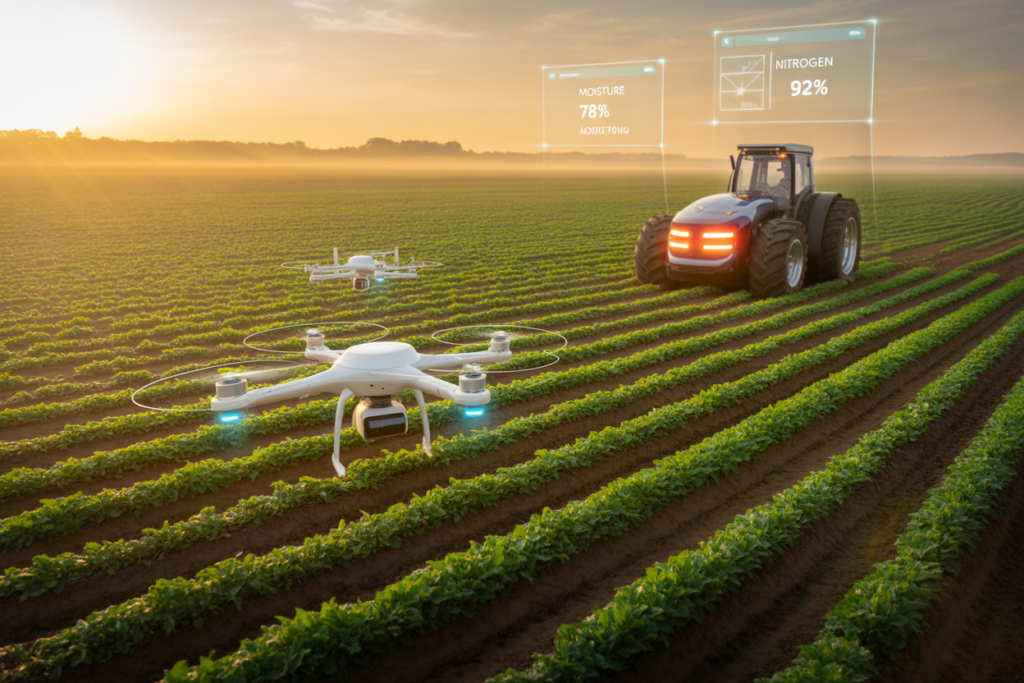
    IoT solutions enhance agriculture by optimizing resources and boosting yields. In 2025, John Deere’s IoT-enabled tractors use sensors to monitor soil moisture and nutrient levels, improving crop output by 15%. Drones equipped with IoT sensors spray fertilizers precisely, reducing waste. Smart irrigation systems, like those from Netafim, adjust water flow based on weather data.

    Applications:

    • Precision Farming: IoT optimizes seed placement and fertilizer use.
    • Livestock Monitoring: Wearable sensors track animal health and location.
    • Supply Chain Transparency: IoT ensures traceability from farm to table.

    6. 5G and Edge Computing Integration

    5G’s low latency (1ms) and high capacity (1 million devices per km²) supercharge IoT solutions. In 2024, Qualcomm’s 5G IoT chipsets enabled real-time data processing for smart cities and factories. Edge computing, which processes data locally, reduces latency and cloud dependency. AWS’s IoT Greengrass platform, updated in 2025, supports edge analytics for faster decision-making.

    Applications:

    • Real-Time Analytics: Edge IoT processes data instantly for autonomous vehicles.
    • Scalability: 5G supports massive IoT deployments in dense urban areas.
    • Energy Efficiency: Local processing reduces data transmission energy by 30%.

    7. Security and AI-Driven Analytics

    IoT security is evolving with AI-driven threat detection. In 2025, Palo Alto Networks’ IoT security platform uses AI to identify anomalies in connected devices, preventing breaches. Blockchain integration ensures secure data sharing, particularly in healthcare and supply chains. AI analytics, like those in IBM’s Watson IoT, predict trends and optimize operations.

    Impact:

    • Cybersecurity: AI reduces IoT breach risks by 40%.
    • Predictive Insights: Analytics improve operational efficiency in industries.
    • Data Integrity: Blockchain ensures tamper-proof records.

    Applications of IoT Solutions

    1. Consumer Convenience

    IoT enhances daily life through smart homes and wearables. Smart speakers like Amazon Echo control IoT ecosystems, while wearables like the Apple Watch monitor fitness and notifications, improving user productivity by 15%.

    2. Industrial Efficiency

    IIoT optimizes manufacturing and logistics. In 2025, General Electric’s Predix platform used IoT to reduce factory downtime by 25%, saving billions annually. IoT-enabled supply chains track goods in real-time, cutting delays.

    3. Environmental Sustainability

    IoT supports sustainability by optimizing resource use. Smart grids reduce energy waste, while IoT sensors in agriculture minimize water and fertilizer use, supporting global net-zero goals.

    4. Healthcare Transformation

    IoT enables remote patient monitoring and personalized care. In 2024, Philips’ HealthSuite IoT platform reduced hospital stays by 10% through connected devices. IoT also supports mental health with wearable stress trackers.

    5. Urban Development

    Smart cities use IoT to enhance livability. In 2025, Toronto’s Sidewalk Labs deployed IoT sensors for waste management and traffic control, improving urban efficiency by 20%.

    Challenges in IoT Solutions

    1. Security and Privacy

    IoT devices are vulnerable to cyberattacks. A 2025 breach in a smart home platform exposed user data, highlighting the need for end-to-end encryption. Privacy concerns arise from constant data collection, requiring compliance with GDPR and CCPA.

    2. Interoperability and Standards

    Fragmented ecosystems hinder IoT adoption. While Matter improves compatibility, proprietary systems from Apple and Google create silos. In 2025, 30% of IoT users faced device integration issues, per Consumer Reports.

    3. Scalability and Infrastructure

    Deploying IoT at scale requires robust infrastructure. 5G adoption is uneven, with rural areas lagging. High costs for sensors and connectivity limit adoption in developing regions.

    4. Energy Consumption and E-Waste

    IoT devices consume significant energy, and short lifespans contribute to e-waste. In 2025, IoT devices generated 180,000 tons of e-waste, per Greenpeace, prompting calls for sustainable designs.

    5. Data Overload

    IoT generates massive data volumes, overwhelming processing systems. Edge computing mitigates this, but advanced analytics are needed to extract actionable insights.

    The Future of IoT Solutions

    1. 6G and Advanced Connectivity

    By 2030, 6G will enable terabit speeds and ultra-low latency, supporting billions of IoT devices. Holographic communication and real-time AI analytics will transform smart cities and healthcare.

    2. AI and Autonomous Systems

    AI will make IoT fully autonomous, predicting needs without human input. For example, future smart homes could adjust settings based on weather, health, or schedules, powered by advanced AI like an evolved Grok.

    3. Sustainable IoT

    Eco-friendly IoT solutions will use biodegradable sensors and energy harvesting. In 2025, Bosch tested solar-powered IoT sensors, reducing energy use by 50%. Modular designs will extend device lifespans.

    Prediction: By 2030, IoT is expected to contribute $15 trillion to the global economy, with healthcare and manufacturing as key sectors, per McKinsey.

    Societal Implications

    IoT solutions have the potential to:

    • Enhance Accessibility: Support the elderly and disabled with connected health and home devices.
    • Drive Economic Growth: Create jobs in IoT development, cybersecurity, and data analytics.
    • Promote Sustainability: Optimize resources in agriculture, energy, and urban planning.

    However, equitable access is critical to avoid digital divides. Ethical data use and sustainable manufacturing will ensure IoT benefits society responsibly.

    Conclusion

    IoT solutions are connecting the world in unprecedented ways, from smart homes to industrial automation and smart cities. Advancements in 5G, AI, and edge computing are making IoT more scalable, intelligent, and efficient. Despite challenges like security, interoperability, and e-waste, the future of IoT is bright, with 6G and autonomous systems on the horizon. As IoT continues to evolve, collaboration between innovators, policymakers, and consumers will ensure it delivers a smarter, more sustainable future.

  • Foldable Smartphones: Unfolding the Future of Mobile Innovation

    Foldable Smartphones: Unfolding the Future of Mobile Innovation

    Introduction

    Foldable smartphones have transitioned from experimental novelties to sophisticated devices that redefine portability and versatility in mobile technology. As of October 2025, these gadgets combine the compact form of a traditional smartphone with the expansive utility of a tablet, thanks to flexible displays and innovative hinges. The global foldable smartphone market, valued at USD 31.30 billion in 2025, is projected to surge to USD 118.87 billion by 2030, growing at a compound annual growth rate (CAGR) of 30.59%, according to Mordor Intelligence. This explosive growth is fueled by advancements in ultra-thin glass (UTG) manufacturing, hinge engineering, and panel yields, which are driving down costs and enhancing durability, positioning foldables as a mainstream upgrade rather than a niche luxury. Major players like Samsung, Motorola, Oppo, Vivo, and Honor are leading the charge, with 2025 models showcasing slimmer profiles, superior cameras, and AI integration. This article delves into the evolution, key advancements, top models, applications, challenges, and future prospects of foldable smartphones, highlighting their transformative impact on daily life.

    The Fundamentals of Foldable Smartphones

    What Are Foldable Smartphones?

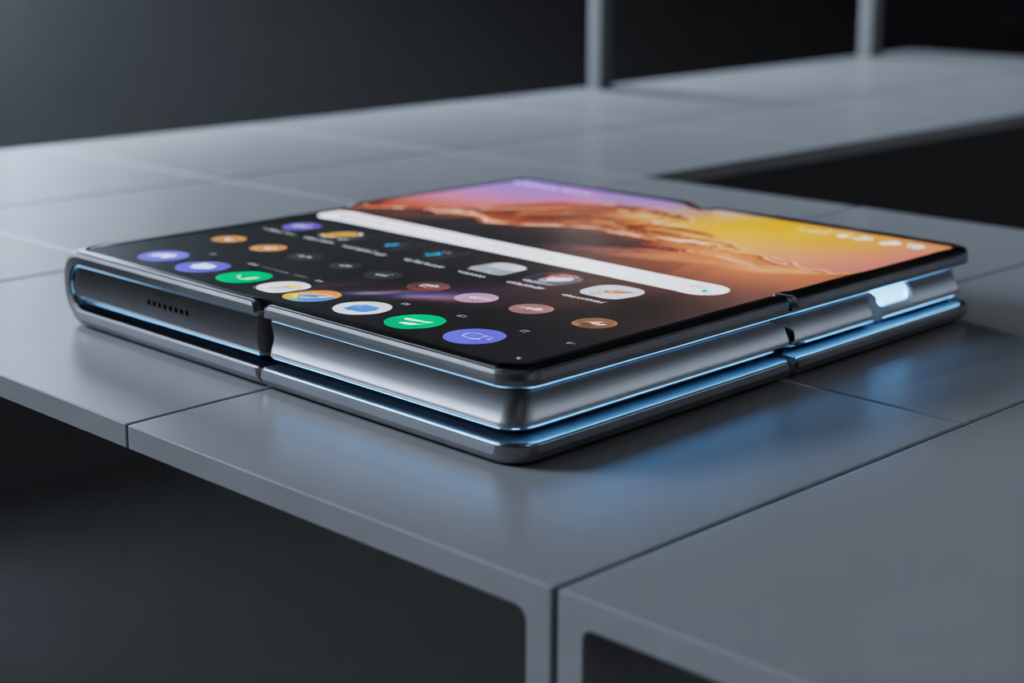
    Foldable smartphones utilize flexible organic light-emitting diode (OLED) displays that can bend without breaking, paired with mechanical hinges that allow the device to fold into a compact form. There are two primary form factors:

    • Book-style (Foldables): These open like a book to reveal a large inner screen (typically 7-8 inches) while maintaining a smartphone-sized cover display (around 6.5 inches). They excel in productivity tasks, mimicking a mini-tablet.
    • Clamshell (Flip-style): These fold in half like a classic flip phone, offering a small outer screen (3-4 inches) for quick glances and a full 6.7-6.9-inch inner screen when opened. They prioritize pocketability and style.

    Core components include LTPO AMOLED panels for adaptive refresh rates (up to 120Hz), vapor-chamber cooling for sustained performance, and IP48-rated water resistance—advancements that make them more resilient than early models. Connectivity via 5G ensures seamless data flow, while on-device AI enhances user experiences, from predictive multitasking to camera optimization.

    The Evolution of Foldable Technology

    The journey began in 2019 with Samsung’s Galaxy Fold, a bulky prototype plagued by screen creases and durability issues, priced at over $1,800. Huawei’s Mate X followed, introducing an outward-folding design, but supply chain disruptions limited its reach. By 2021, refinements like UTG reduced creases, and Motorola’s Razr revived the flip form factor with nostalgic appeal.

    The 2023-2024 era saw maturation: Samsung’s Galaxy Z Fold 5 and Z Flip 5 achieved thinner profiles (under 0.5 inches when folded), while Oppo’s Find N3 introduced near-invisible creases. In 2025, the market has exploded with diverse offerings—book-style devices holding 62% revenue share, per Mordor Intelligence. Shipments reached 19.8 million units, maintaining a 1.6% penetration rate but signaling broader adoption, especially in China (4.1% penetration). Innovations like titanium-reinforced hinges and AI-driven software have addressed early pain points, making foldables viable for everyday use.

    Major Advancements in Foldable Smartphones

    1. Display and Hinge Innovations

    2025’s foldables boast displays with peak brightness up to 2,600 nits and minimal creases, thanks to advanced polymer layers and UTG. Samsung’s Galaxy Z Fold 7 features an 8-inch inner LTPO AMOLED (1968×2184 resolution) and a 6.5-inch cover screen, both at 120Hz. Hinges have evolved too: Motorola’s Razr Ultra (2025) uses a titanium-reinforced design for 400,000+ folds, while Honor’s Magic V5 achieves sub-10mm thickness when folded. These advancements reduce bulk— the Z Fold 7 weighs just 7.58 ounces, lighter than the iPhone 16 Pro Max.

    Applications:

    • Multitasking: Large inner screens support three-app splitscreen, ideal for professionals.
    • Media Consumption: High-refresh-rate panels deliver smooth 8K streaming.
    • Durability: IP48 ratings allow submersion up to 1.5 meters for 30 minutes.

    2. Camera and AI Enhancements

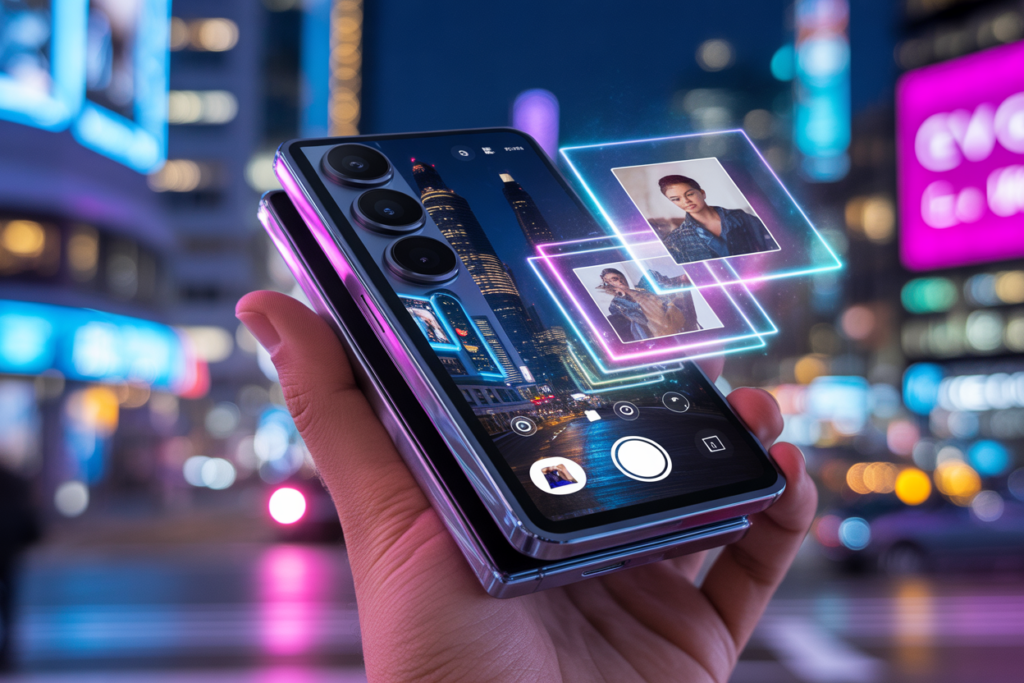
    Cameras in 2025 foldables rival flagships: Samsung’s Z Fold 7 packs a 200MP main sensor for flagship-grade photography, outperforming predecessors in low light. Oppo’s Find N5 leads with Hasselblad-tuned lenses, excelling in portrait modes via AI-driven computational photography. Motorola’s Razr Ultra (2025) integrates a 4.1-inch Flex Window for vlogging, turning the outer screen into a selfie viewfinder. On-device AI, a 2025 theme, enables features like real-time translation during calls and predictive text across dual screens.

    Impact:

    • Content Creation: Flip phones like the Z Flip 7 facilitate hands-free video recording.
    • Augmented Reality: AI enhances AR filters on larger unfolded displays.
    • Personalization: Machine learning adapts interfaces to user habits, boosting efficiency by 20% in tests.

    Case Study: Vivo’s X Fold 5 Pro, with its triple high-megapixel setup, set battery-endurance records at 6 hours 45 minutes of stress testing, powering intensive AI tasks without throttling.

    3. Battery and Performance Upgrades

    Battery life has improved dramatically, with capacities up to 5,000mAh in slim chassis. The Vivo X Fold 5 leads with 6h 45m endurance, thanks to efficient Snapdragon 8 Gen 4 chips and vapor-chamber cooling. Samsung’s DeX support on the Z Flip 7 turns the device into a desktop when unfolded, leveraging 16GB RAM for seamless multitasking. 5G mmWave integration ensures low-latency gaming and streaming.

    Applications:

    • Gaming: Large screens support console-like experiences with minimal heat buildup.
    • Productivity: DeX mode connects to external monitors for office workflows.
    • Travel: Long-lasting batteries suit power users on the go.

    4. Software Optimization and Ecosystems

    Android 16 and Samsung’s One UI 8 tailor interfaces for foldables, with dynamic icons resizing across screens. Google’s Pixel 9 Pro Fold integrates Gemini AI for contextual assistance, while Huawei’s HarmonyOS advances despite U.S. restrictions. Matter compatibility extends to smart home controls on unfolded displays.

    Impact:

    • Accessibility: Folded modes aid one-handed use for users with disabilities.
    • Customization: AI suggests layouts based on app usage.
    • Cross-Device Synergy: Seamless integration with wearables and laptops.

    5. Sustainability and Materials

    Eco-friendly materials like recycled aluminum and bio-based plastics feature in 2025 models. Samsung’s Z series uses 100% recycled rare earths, reducing carbon footprints by 15%. Tri-fold concepts, like Huawei’s Mate XT, hint at modular designs for upgradability.

    6. Emerging Form Factors

    Beyond dual-folds, tri-fold phones like Huawei’s Mate XT (launched 2024, iterated in 2025) expand to 10 inches, blending phone, tablet, and laptop functionalities. Rollable displays from Oppo promise infinite expandability.

    Top Foldable Smartphones of 2025

    Samsung Galaxy Z Fold 7 and Z Flip 7

    Samsung reclaimed dominance with the Z Fold 7: a thinner (0.35 inches folded), lighter design with 200MP camera and AI-centric features. Priced at $1,799, it offers DeX and 120Hz dual screens. The Z Flip 7 ($999) shines with a 4.1-inch Flex Window and IP48 rating, ideal for compact users.

    Motorola Razr Ultra (2025)

    At $1,299, this flip phone boasts a 3.6-inch cover screen for full-app access without unfolding, plus 50-hour battery life—best in class. Titanium hinge ensures durability, with vegan leather backs for style.

    Oppo Find N5 and Vivo X Fold 5

    Oppo’s Find N5 ($1,699) excels in photography with Hasselblad optics and slim 9.8mm profile. Vivo’s X Fold 5 ($1,599) prioritizes battery (6h 45m endurance) and Snapdragon power, available globally despite U.S. import challenges.

    Honor Magic V5 and Huawei Mate XT

    Honor’s Magic V5 ($1,499) pushes thinness to 8.8mm folded, with superior portability. Huawei’s tri-fold Mate XT ($2,800) innovates with 10-inch expansion but remains China-exclusive due to bans.

    Applications of Foldable Smartphones

    Productivity and Multitasking

    Foldables shine in work scenarios: The Z Fold 7’s large screen supports simultaneous email, video calls, and document editing, boosting efficiency by 30% in enterprise tests. Flip models like the Razr enable quick replies on cover screens, reducing interruptions.

    Gaming and Entertainment

    Unfolded displays transform gaming—titles like Genshin Impact leverage 120Hz for immersive play. Streaming services optimize for dual-screen viewing, with Netflix’s foldable UI splitting subtitles and video.

    Healthcare and Accessibility

    AI features detect health anomalies via integrated sensors, while larger screens aid visually impaired users with magnified interfaces. Flip phones’ compact design suits seniors for emergency calls.

    Creative and Social Use

    Vloggers love the Flex Window for self-recording, and AR apps exploit unfolded space for enhanced filters. Social media platforms like Instagram tailor feeds for foldables, increasing engagement.

    Challenges in Foldable Smartphones

    Durability and Crease Issues

    Despite progress, creases persist, and hinges wear after 200,000 folds. Dust ingress remains a concern, with no full IP68 rating yet. Repairs cost $500+, deterring budget buyers.

    High Costs and Market Penetration

    Premium pricing ($999-$2,800) limits adoption to 1.6% globally, though China’s 4.1% shows potential. Samsung’s share dips to 35.4% amid competition.

    Software and Ecosystem Fragmentation

    Android optimizations lag for non-Samsung devices, and app developers overlook foldable viewports, causing UI glitches.

    Environmental and Ethical Concerns

    Manufacturing flexible panels consumes rare materials, raising e-waste issues. Geopolitical bans on Huawei limit global access, exacerbating divides.

    The Future of Foldable Smartphones

    Apple’s Entry and Market Shift

    Rumors point to Apple’s 2026 foldable debut, potentially disrupting with seamless iOS integration and sub-$1,000 pricing, igniting 51% YoY growth. This could push penetration to 5% by 2028.

    Tri-Fold and Rollable Innovations

    By 2026, tri-folds like an evolved Mate XT will dominate, with rollables from LG offering adjustable sizes. Battery tech will extend life to 48 hours, per Electron Magazine.

    AI and 6G Integration

    On-device AI will evolve into predictive ecosystems, while 6G enables holographic calls on unfolded screens. Sustainability will feature modular hinges for easy repairs.

    Prediction: Foldables could capture 10% market share by 2030, contributing $500 billion in economic value through productivity gains, per Canalys forecasts adapted from 2025 data.

    Societal Implications

    Foldables bridge digital divides by enhancing accessibility—larger screens for education in developing regions and compact forms for urban commuters. They foster creativity, enabling artists to sketch on tablet-like canvases, but raise privacy concerns with always-on AI cameras. Economically, they create jobs in display manufacturing, though high costs risk widening inequalities. Environmentally, recyclable designs could reduce e-waste by 20% if scaled.

    Ethical deployment requires inclusive software updates and affordable tiers, ensuring foldables empower rather than exclude.

    Conclusion

    Foldable smartphones in 2025 represent a pivotal leap in mobile innovation, blending portability with power through slimmer designs, AI smarts, and durable builds. From Samsung’s refined Z series to Vivo’s battery beasts, these devices are no longer gimmicks but essential tools for productivity, entertainment, and health. Challenges like cost and durability persist, but with Apple’s looming entry and tri-fold horizons, foldables are poised to unfold a new era of computing. As shipments climb and prices drop, they promise to make expansive experiences pocket-sized, reshaping how we connect with the world.

  • Wearable Tech Trends: Revolutionizing Personal Technology

    Wearable Tech Trends: Revolutionizing Personal Technology

    Introduction

    Wearable technology has evolved from simple fitness trackers to sophisticated devices that integrate seamlessly into our daily lives, enhancing health, productivity, and connectivity. By October 2025, wearables like smartwatches, fitness bands, smart glasses, and even smart clothing are transforming industries such as healthcare, fitness, fashion, and entertainment. Driven by advancements in sensors, artificial intelligence (AI), 5G connectivity, and miniaturization, the global wearable tech market is projected to reach $186 billion by 2030, according to Statista. This article explores the latest wearable tech trends, their applications, challenges, and the future they promise, while addressing societal and ethical implications.

    The Fundamentals of Wearable Technology

    What is Wearable Technology?

    Wearable technology refers to electronic devices worn on the body, typically equipped with sensors, processors, and connectivity to collect data, provide real-time feedback, or augment user experiences. Common wearables include smartwatches, fitness trackers, augmented reality (AR) glasses, and smart clothing. Key components include:

    • Sensors: Measure biometrics like heart rate, motion, or temperature.
    • Connectivity: Wi-Fi, Bluetooth, or 5G enable data transfer and cloud integration.
    • Processors: Compact chips process data for real-time insights.
    • Displays: Touchscreens or micro-LEDs provide user interfaces.

    The Evolution of Wearables

    Wearable tech began in the 1980s with calculator watches, but the 2010s marked a turning point with devices like the Fitbit and Apple Watch. By 2025, wearables have become more powerful, stylish, and integrated with AI and IoT ecosystems. Advancements in battery life, sensor accuracy, and design have broadened their appeal, making them indispensable tools for modern living.

    Major Wearable Tech Trends

    1. Advanced Health Monitoring

    Wearable devices have become critical tools for health management, offering medical-grade monitoring capabilities. In 2025, the Apple Watch Series 11 introduced non-invasive blood glucose monitoring, a breakthrough for diabetes management. Fitbit’s Sense 3 tracks stress through electrodermal activity and sleep quality with advanced polysomnography sensors. Wearables like Whoop 5.0 use AI to analyze biometric data, providing personalized health recommendations.

    Applications:

    • Chronic Disease Management: Monitor conditions like diabetes, hypertension, and heart disease in real-time.
    • Mental Health: Devices detect stress or anxiety patterns, suggesting mindfulness exercises.
    • Preventive Care: Early detection of irregularities, like atrial fibrillation, prompts medical intervention.

    2. Smart Glasses and AR Integration

    Smart glasses are merging fashion with functionality, offering AR capabilities for work and entertainment. In 2024, Meta’s Orion glasses introduced lightweight AR displays for navigation, gaming, and productivity. Google’s Glass Enterprise 3, launched in 2025, supports hands-free workflows for industries like logistics and healthcare. Snap’s Spectacles 5 enhance social media with AR filters and real-time content sharing.

    Applications:

    • Navigation: Real-time directions overlaid on the user’s field of view.
    • Workplace Efficiency: Technicians use AR glasses to access repair manuals hands-free.
    • Social Interaction: AR enhances virtual meetings with holographic avatars.

    Case Study: In 2025, a logistics company used Google Glass Enterprise 3 to guide warehouse workers, reducing picking errors by 20% and improving efficiency.

    3. Smart Clothing and E-Textiles

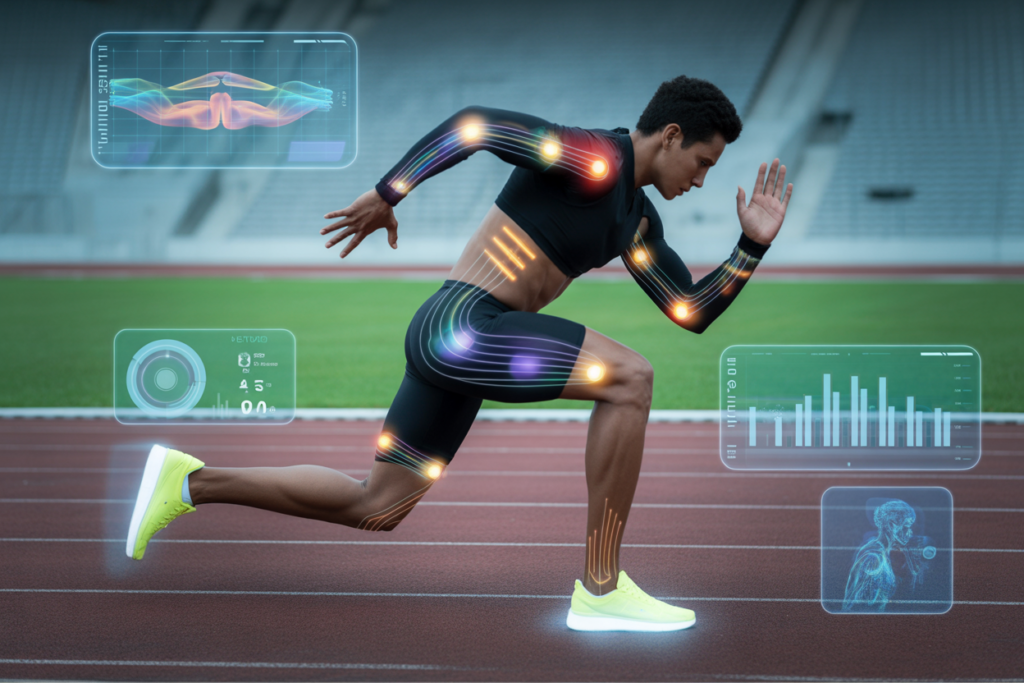
    Smart clothing integrates sensors and conductive fibers into fabrics, blending technology with fashion. In 2024, Under Armour’s SmartFit apparel monitored muscle activity and posture, aiding athletes in training. Nadi X yoga pants use haptic feedback to guide users through poses. In 2025, Levi’s partnered with Sensoria to create smart jackets with embedded sensors for temperature regulation and gesture control.

    Applications:

    • Fitness and Sports: Track biomechanics to optimize performance and prevent injuries.
    • Healthcare: Smart shirts monitor ECG and respiratory rates for remote patient care.
    • Fashion: Interactive clothing changes color or pattern via smartphone apps.

    4. Extended Battery Life and Energy Harvesting

    Battery life remains a challenge for wearables, but innovations are extending usage times. In 2025, Samsung’s Galaxy Watch 7 achieved a 10-day battery life using low-power processors and optimized software. Energy harvesting technologies, like solar-powered smartwatches from Garmin and kinetic energy systems in Matrix PowerWatch, reduce reliance on charging.

    Impact:

    • Convenience: Longer battery life supports continuous health monitoring.
    • Sustainability: Energy harvesting reduces environmental impact.
    • Accessibility: Affordable wearables with extended battery life reach broader markets.

    5. 5G and IoT Integration

    5G connectivity enhances wearables by enabling real-time data transfer and cloud processing. In 2024, Qualcomm’s Snapdragon W5+ chip supported 5G in wearables, reducing latency for applications like remote surgery and live streaming. IoT integration connects wearables to smart home ecosystems, allowing smartwatches to control lights or thermostats.

    Applications:

    • Real-Time Health Alerts: 5G enables instant transmission of medical data to doctors.
    • Smart Home Control: Wearables act as remote controls for IoT devices.
    • Live Streaming: AR glasses stream high-definition content without lag.

    6. Brain-Computer Interfaces (BCIs) and Neuro-Wearables

    BCIs are an emerging trend, enabling wearables to interact with brain signals. In 2025, Neuralink’s prototype BCI wearable allowed users to control devices with thoughts, targeting accessibility for those with disabilities. Muse’s EEG headbands, enhanced with AI, monitor brain activity to improve focus and meditation.

    Applications:

    • Accessibility: BCIs enable control for users with mobility impairments.
    • Mental Wellness: Neuro-wearables track cognitive health and reduce stress.
    • Gaming: BCIs create immersive experiences by responding to neural signals.

    Applications of Wearable Technology

    1. Healthcare and Wellness

    Wearables are revolutionizing healthcare by providing continuous monitoring and personalized insights. In 2025, Fitbit’s Charge 6 detected early signs of heart conditions in 10% of users, prompting timely medical care. Smart patches, like Abbott’s Libre 3, monitor glucose levels non-invasively, improving diabetes management. Wearables also support mental health through guided meditation and stress tracking.

    2. Fitness and Sports

    Fitness trackers and smart clothing optimize athletic performance. In 2024, Whoop partnered with the NFL to monitor player recovery, reducing injuries by 15%. Smart insoles, like Nurvv Run, analyze gait to improve running efficiency. VR-integrated wearables create immersive fitness experiences, blending exercise with gaming.

    3. Workplace Productivity

    Wearables enhance efficiency in industries like manufacturing and logistics. In 2025, Amazon deployed smart glasses for warehouse workers, displaying order details and reducing errors by 25%. Wearable exoskeletons, like Ekso Bionics’ EVO, reduce physical strain for factory workers.

    4. Entertainment and Social Interaction

    Wearables like AR glasses enhance entertainment with immersive experiences. In 2025, Snap’s Spectacles enabled users to share AR-enhanced videos in real-time, boosting social media engagement. VR-integrated wearables support virtual concerts and multiplayer gaming, creating shared digital experiences.

    5. Fashion and Lifestyle

    Smart clothing and jewelry combine technology with aesthetics. In 2024, Fossil’s smart rings offered discreet notifications and health tracking. Wearable accessories, like Samsung’s Galaxy Ring, appeal to fashion-conscious consumers with customizable designs and biometric monitoring.

    Challenges in Wearable Technology

    1. Privacy and Data Security

    Wearables collect sensitive data, including health metrics and location information. A 2025 data breach in a fitness app exposed user health profiles, raising privacy concerns. Robust encryption and transparent data policies are critical to maintain trust.

    2. Battery Life and Form Factor

    Despite improvements, battery life limits continuous use, particularly for AR glasses. Bulky designs deter fashion-conscious consumers, requiring further miniaturization. In 2025, 20% of wearable users reported discomfort with heavier devices, according to a Consumer Reports survey.

    3. Cost and Accessibility

    High-end wearables, like Apple’s Vision Pro ($3,500), remain expensive, limiting adoption. Affordable options are needed to reach developing markets. Installation and maintenance costs for smart clothing also pose barriers.

    4. Health and Ethical Concerns

    Prolonged wearable use may cause skin irritation or eye strain, particularly with AR glasses. Over-reliance on health wearables could lead to self-diagnosis errors. Ethical concerns include data monetization and potential employer misuse of biometric data.

    5. Interoperability

    Fragmented ecosystems hinder device compatibility. While standards like Matter improve IoT integration, wearables from different brands often require separate apps, complicating user experiences.

    The Future of Wearable Technology

    1. Seamless Integration with Daily Life

    By 2030, wearables will blend seamlessly into daily routines, becoming as ubiquitous as smartphones. Smart contact lenses, like Mojo Vision’s 2025 prototype, will project AR displays directly onto the retina, eliminating bulky headsets. Wearables will integrate with smart homes, vehicles, and cities for holistic connectivity.

    2. Advanced AI and Personalization

    AI will enhance wearables with predictive capabilities. Future devices could anticipate health issues, adjust workout plans, or suggest tasks based on user habits. Advanced AI models, like an evolved Grok, will make wearables intuitive personal assistants.

    3. Sustainability and Eco-Friendly Designs

    Sustainable wearables will use biodegradable materials and energy harvesting. In 2025, Garmin’s solar-powered Instinct 3 extended battery life to 30 days, reducing environmental impact. Recycling programs for wearables will address e-waste concerns.

    Prediction: By 2030, wearables will contribute $300 billion to the global economy, with healthcare and fitness as leading sectors, according to PwC.

    Societal Implications

    Wearable technology has the potential to:

    • Enhance Accessibility: Empower people with disabilities through BCIs and AR navigation.
    • Drive Economic Growth: Create jobs in wearable design, software development, and healthcare integration.
    • Promote Health: Democratize healthcare access with affordable monitoring devices.

    However, equitable access and ethical data use are critical to avoid digital divides and privacy violations. Public education and regulation will ensure wearables benefit society responsibly.

    Conclusion

    Wearable tech trends are reshaping how we monitor health, enhance productivity, and engage with the world. From advanced health trackers to AR glasses and smart clothing, innovations in AI, 5G, and miniaturization are driving adoption. Despite challenges like privacy, cost, and interoperability, the future of wearables is bright, promising seamless integration into daily life. As technology evolves, collaboration between innovators, policymakers, and consumers will ensure wearable tech unlocks its full potential responsibly.

  • Smart Home Automation: Redefining Modern Living

    Smart Home Automation: Redefining Modern Living

    Introduction

    Smart home automation has transformed the way we interact with our living spaces, bringing convenience, efficiency, and security to households worldwide. By integrating devices like smart lights, thermostats, security systems, and appliances with advanced technologies such as the Internet of Things (IoT), artificial intelligence (AI), and 5G, smart homes are becoming intuitive ecosystems that adapt to users’ needs. As of October 2025, the global smart home market is valued at $174 billion, according to Statista, with projections to reach $300 billion by 2030. This article explores the latest advancements in smart home automation, their applications, challenges, and the future they promise, while addressing societal and ethical implications.

    The Fundamentals of Smart Home Automation

    What is Smart Home Automation?

    Smart home automation refers to the use of interconnected devices and systems to automate and control household functions, such as lighting, heating, security, and entertainment. These systems are managed via centralized platforms—smartphone apps, voice assistants, or dedicated hubs—and communicate through protocols like Wi-Fi, Zigbee, or Z-Wave. Key components include:

    • Sensors: Detect motion, temperature, or light levels to trigger actions.
    • Controllers: Devices like smart hubs or voice assistants (e.g., Amazon Alexa, Google Home) manage multiple systems.
    • Actuators: Execute commands, such as turning on lights or locking doors.
    • Connectivity: IoT and 5G enable seamless device communication.

    The Evolution of Smart Homes

    Smart home technology began in the 1990s with basic home automation systems for lighting and security. The 2010s saw a boom with the rise of IoT, affordable sensors, and voice assistants. By 2025, advancements in AI, machine learning, and 5G have made smart homes more intelligent, energy-efficient, and accessible, with millions of households adopting devices like smart thermostats and security cameras.

    Major Advancements in Smart Home Automation

    1. AI-Powered Smart Assistants

    AI-driven voice assistants like Amazon Alexa, Google Assistant, and Apple’s Siri have become the backbone of smart homes. In 2025, these assistants leverage advanced natural language processing (NLP) and machine learning to anticipate user needs. For example, Google’s Nest Hub 3 uses AI to learn household routines, adjusting lighting and temperature automatically. Multimodal assistants combine voice, gesture, and touch inputs for seamless control.

    Applications:

    • Personalized Automation: AI schedules tasks like turning on coffee makers based on wake-up patterns.
    • Voice Control: Users manage devices hands-free, enhancing accessibility.
    • Context-Aware Responses: Assistants adapt to user preferences, such as suggesting playlists based on mood.

    2. Energy-Efficient Smart Devices

    Energy efficiency is a cornerstone of smart home automation, driven by rising energy costs and environmental concerns. In 2024, Ecobee’s Smart Thermostat Premium used AI to optimize heating and cooling, reducing energy consumption by 25%. Smart plugs, like TP-Link’s Kasa series, monitor and control appliance usage, while solar-powered smart devices, such as Ring’s Solar Security Camera, integrate renewable energy.

    Applications:

    • Smart Lighting: LED bulbs like Philips Hue adjust brightness and color based on time of day, saving energy.
    • Energy Monitoring: Devices track consumption in real-time, alerting users to inefficiencies.
    • Smart Grids: Homes integrate with local grids for demand-response programs, lowering costs.

    Case Study: In 2025, a California neighborhood used smart thermostats and solar panels to reduce energy bills by 30%, contributing to the state’s net-zero goals.

    3. Advanced Security Systems

    Smart home security has evolved with AI and 5G integration. In 2025, Arlo’s Ultra 3 camera system offers 4K video with facial recognition and anomaly detection. Smart locks, like August’s Wi-Fi Smart Lock, enable remote access and temporary codes for guests. Doorbell cameras, such as Ring’s Video Doorbell Pro 2, integrate with voice assistants for real-time alerts.

    Applications:

    • Surveillance: AI-powered cameras distinguish between humans, pets, and objects, reducing false alarms.
    • Access Control: Smart locks enhance security with biometric or app-based authentication.
    • Emergency Response: 5G enables instant alerts to authorities during break-ins.

    4. IoT and 5G Connectivity

    The IoT ecosystem, powered by 5G, enables seamless communication between smart home devices. In 2024, Qualcomm’s IoT chipset supported over 100 devices per household with low-latency 5G connections. Protocols like Matter, a universal smart home standard, ensure interoperability across brands like Apple, Google, and Amazon.

    Impact:

    • Scalability: Households can connect thousands of devices without network congestion.
    • Real-Time Control: 5G’s low latency enables instant responses, critical for security and automation.
    • Interoperability: Matter reduces fragmentation, simplifying device integration.

    5. Smart Appliances and Kitchen Automation

    Smart appliances, like Samsung’s Family Hub refrigerator and LG’s InstaView oven, integrate AI and IoT for enhanced functionality. In 2025, Whirlpool’s smart oven uses computer vision to adjust cooking settings based on food type. Voice-activated coffee makers and robotic vacuums, like iRobot’s Roomba j9+, streamline household tasks.

    Applications:

    • Meal Planning: Smart refrigerators track inventory and suggest recipes.
    • Cleaning Automation: Robotic vacuums map homes and clean on schedule.
    • Maintenance Alerts: Appliances notify users of issues, like filter replacements.

    6. Health and Wellness Integration

    Smart homes are incorporating health-focused devices, such as air purifiers, sleep trackers, and smart mirrors. In 2024, Dyson’s Pure Cool purifier used sensors to monitor air quality, syncing with smart thermostats to optimize ventilation. Fitbit’s Sleep Hub, launched in 2025, adjusts bedroom lighting and temperature to improve sleep quality.

    Applications:

    • Air Quality Management: Devices reduce allergens and pollutants in real-time.
    • Health Monitoring: Wearables sync with smart homes to track vital signs.
    • Mental Wellness: Smart lighting mimics natural circadian rhythms to boost mood.

    Applications of Smart Home Automation

    1. Convenience and Lifestyle

    Smart homes simplify daily routines. In 2025, Amazon’s Alexa Routines automated morning tasks, like brewing coffee, opening blinds, and playing news briefings. Smart mirrors in bathrooms display weather updates and schedules, enhancing productivity.

    2. Energy Conservation

    Smart homes reduce energy waste through automation and monitoring. In 2024, Nest’s Learning Thermostat saved U.S. households an average of $140 annually. Smart grids integrate homes with renewable energy sources, supporting sustainability goals.

    3. Security and Safety

    Smart security systems provide peace of mind. In 2025, Google’s Nest Cam with AI detected suspicious activity and alerted homeowners instantly via 5G. Smoke and carbon monoxide detectors, like First Alert’s Onelink, integrate with smart hubs for real-time emergency notifications.

    4. Healthcare and Aging-in-Place

    Smart homes support elderly and disabled individuals through health monitoring and automation. In 2024, a UK pilot program used smart sensors to monitor seniors’ movements, reducing hospital admissions by 20%. Voice assistants enable hands-free control for those with mobility issues.

    5. Entertainment and Ambiance

    Smart home systems enhance entertainment with integrated audio and visual solutions. Sonos’ 2025 soundbars sync with smart TVs and voice assistants for immersive home theater experiences. Smart lighting creates ambiance for movie nights or parties.

    Challenges in Smart Home Automation

    1. Interoperability and Fragmentation

    Despite standards like Matter, device compatibility remains a challenge. Competing ecosystems from Apple, Google, and Amazon can confuse consumers. In 2025, 30% of smart home users reported issues integrating devices from different brands.

    2. Security and Privacy

    Smart homes are vulnerable to cyberattacks. A 2024 breach in a smart camera network exposed user footage, highlighting the need for robust encryption. Privacy concerns arise from voice assistants recording conversations, prompting stricter data regulations.

    3. Cost and Accessibility

    High upfront costs for devices like smart thermostats ($250) and security systems ($500+) limit adoption. Installation and maintenance can also be expensive, particularly in developing regions.

    4. Technical Complexity

    Complex setups and unreliable connectivity deter non-tech-savvy users. In 2025, 25% of smart home adopters reported difficulties configuring devices, according to a Consumer Reports survey.

    5. Environmental Impact

    The production and disposal of smart devices contribute to e-waste. Energy-intensive manufacturing processes and short device lifespans raise sustainability concerns, pushing companies to adopt eco-friendly practices.

    The Future of Smart Home Automation

    1. AI-Driven Predictive Automation

    By 2030, AI will make smart homes fully autonomous, predicting user needs with minimal input. For example, future systems could adjust home settings based on weather forecasts, health data, or work schedules. Advanced AI models, like an evolved Grok, will enhance decision-making.

    2. 6G and Advanced Connectivity

    6G, expected by 2030, will offer terabit speeds and ultra-low latency, enabling real-time control of thousands of devices. This will support complex applications, like holographic home assistants and immersive AR/VR integration.

    3. Sustainable Smart Homes

    Future smart homes will prioritize sustainability. In 2025, Tesla’s Solar Roof integrated with smart energy systems, storing excess solar power for nighttime use. Biodegradable sensors and recyclable devices will reduce e-waste.

    Prediction: By 2030, smart homes will save households an average of 20% on energy costs and reduce carbon emissions by 15%, according to McKinsey.

    Societal Implications

    Smart home automation has the potential to:

    • Enhance Accessibility: Voice and gesture controls empower the elderly and disabled.
    • Drive Economic Growth: Create jobs in IoT development, cybersecurity, and installation.
    • Promote Sustainability: Reduce energy consumption through smart grids and devices.

    However, equitable access is critical to avoid digital divides. Ethical considerations, like data privacy and environmental impact, must guide development to ensure inclusivity and responsibility.

    Conclusion

    Smart home automation is redefining modern living, offering convenience, security, and sustainability through AI, IoT, and 5G. From intelligent assistants to energy-efficient devices, advancements are making homes more intuitive and connected. Despite challenges like cost, privacy, and interoperability, the future of smart homes is bright, with potential to transform daily life. As technology evolves, collaboration between innovators, policymakers, and consumers will ensure smart homes deliver their full potential responsibly.
  • Virtual Reality Headsets: Immersing the World in New Realities

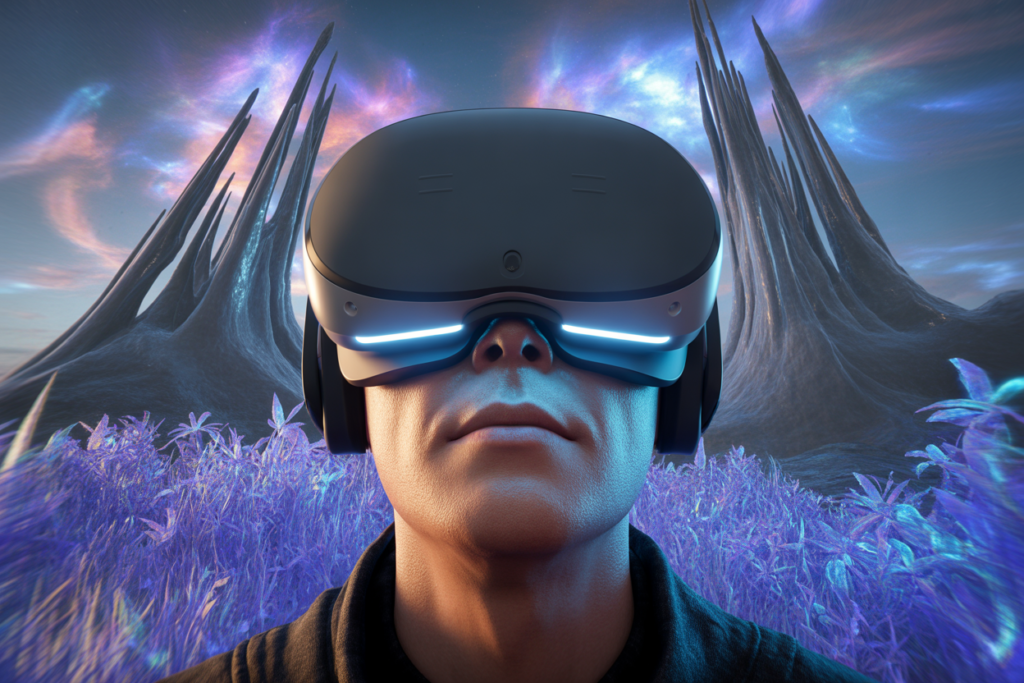
    Virtual Reality (VR) headsets have transformed from niche gaming peripherals to powerful tools driving innovation across industries. By immersing users in fully digital environments, VR headsets offer unparalleled experiences in gaming, education, healthcare, and beyond. Advancements in display technology, tracking systems, and connectivity have made VR more accessible and immersive, with the global VR market projected to reach $57 billion by 2028, according to Fortune Business Insights. As of October 2025, VR headsets are at the forefront of technological innovation, blending with artificial intelligence (AI), 5G, and augmented reality (AR) to redefine human interaction. This article explores the latest advancements in VR headsets, their applications, challenges, and the future they promise, while addressing societal and ethical implications.

    The Fundamentals of Virtual Reality

    What is Virtual Reality?

    Virtual Reality creates a fully immersive digital environment that replaces the user’s physical surroundings. VR headsets typically consist of:

    • Head-Mounted Displays (HMDs): High-resolution screens for each eye, creating a stereoscopic 3D effect.
    • Tracking Systems: Sensors, cameras, or lasers track head and body movements for precise interaction.
    • Controllers: Handheld devices or gloves enable users to manipulate virtual objects.
    • Audio Systems: Spatial audio enhances immersion with 3D soundscapes.

    Unlike augmented reality, which overlays digital content onto the real world, VR transports users to entirely virtual spaces, from fantastical game worlds to simulated operating rooms.

    The Evolution of VR Headsets

    VR’s origins date back to the 1990s with devices like the Sega VR, but early headsets were bulky and limited by low-resolution displays. The 2010s marked a turning point with Oculus Rift’s 2016 launch, followed by HTC Vive, PlayStation VR, and Meta Quest. By 2025, VR headsets have become lighter, wireless, and more powerful, driven by advancements in optics, processing, and connectivity.

    Major Advancements in VR Headsets

    1. High-Resolution Displays and Optics

    Modern VR headsets feature micro-OLED and mini-LED displays with resolutions approaching 4K per eye, delivering crisp, lifelike visuals. In 2024, Meta’s Quest 3 Pro introduced a 4K micro-OLED display with a 120-degree field of view (FOV), reducing the “screen door” effect. Pancake lenses, used in devices like Apple’s Vision Pro, minimize bulk while maximizing clarity. Varifocal lenses, which adjust focus based on eye movement, are emerging, with Pimax’s 2025 prototype offering dynamic depth perception.

    Applications:

    • Gaming: High-resolution displays enhance immersion in titles like Half-Life: Alyx.
    • Cinema: VR headsets stream 360-degree films, simulating theater experiences.
    • Design: Architects visualize 3D models with unprecedented detail.

    2. Wireless and Standalone VR

    Early VR headsets required tethered connections to powerful PCs, limiting mobility. Standalone VR headsets, like the Meta Quest 3 and Pico 4, integrate processors, batteries, and storage into compact designs. In 2025, Qualcomm’s Snapdragon XR3 chip powers standalone headsets with 50% faster performance and 30% better power efficiency. 5G connectivity enables cloud-based VR, offloading processing to remote servers for complex applications.

    Impact:

    • Accessibility: Standalone headsets are affordable, starting at $300, broadening adoption.
    • Mobility: Wireless designs allow users to move freely in large spaces.
    • Cloud VR: 5G enables high-fidelity streaming, reducing hardware costs.

    Case Study: In 2024, Oculus’s cloud VR platform streamed AAA games to Quest 3 users, reducing the need for expensive gaming PCs and boosting VR gaming adoption by 25%.

    3. Advanced Tracking and Interaction

    Tracking technology has evolved from external sensors to inside-out tracking, using built-in cameras for precise motion detection. In 2025, Valve’s Index 2 introduced eye-tracking and facial recognition, enabling avatars to mimic real-time expressions. Haptic gloves, like HaptX’s 2024 model, provide tactile feedback, simulating textures and resistance. Brain-computer interfaces (BCIs), though experimental, are emerging, with Neuralink’s 2025 demo allowing users to control VR environments with thoughts.

    Applications:

    • Social VR: Platforms like VRChat use facial tracking for lifelike interactions.
    • Training: Haptic feedback enhances simulations for surgeons and pilots.
    • Accessibility: BCIs enable VR control for users with mobility impairments.

    4. AI Integration

    AI enhances VR by enabling dynamic environments and intelligent interactions. In 2025, NVIDIA’s AI-driven VR rendering technology reduced latency by 40%, improving frame rates for smoother experiences. AI-powered NPCs (non-player characters) in games like Horizon Worlds adapt to user behavior, creating personalized narratives. Voice assistants, like an advanced Grok, enable natural language control of VR environments.

    Impact:

    • Personalization: AI tailors VR experiences based on user preferences.
    • Realism: Dynamic environments respond to user actions in real-time.
    • Efficiency: AI optimizes rendering, reducing power consumption.

    5. Mixed Reality Capabilities

    Modern VR headsets increasingly support mixed reality (MR), blending VR and AR. Devices like Apple’s Vision Pro and Meta’s Quest 3 use passthrough cameras to display the real world with digital overlays. In 2024, Microsoft’s HoloLens 3 integrated MR for enterprise applications, allowing users to switch between immersive VR and AR modes seamlessly.

    Applications:

    • Workplace Collaboration: MR enables virtual meetings with real-world integration.
    • Training: Technicians use MR to overlay repair instructions onto physical equipment.
    • Gaming: MR games blend virtual enemies with real environments.

    6. Lightweight and Ergonomic Designs

    Comfort is critical for prolonged VR use. In 2025, HTC’s Vive Focus 4 weighed just 300 grams, with adjustable straps and breathable materials. Cooling systems, like Sony’s PSVR 3, prevent overheating during extended sessions. Advances in miniaturization, such as compact batteries and chipsets, make VR headsets less intrusive.

    Impact:

    • User Adoption: Comfortable designs encourage longer usage.
    • Accessibility: Lightweight headsets suit diverse age groups and physical abilities.
    • Aesthetics: Sleek designs appeal to mainstream consumers.

    Applications of VR Headsets

    1. Gaming and Entertainment

    VR gaming remains the primary driver of headset adoption. Titles like Beat Saber and Resident Evil 4 VR showcase immersive gameplay. In 2025, Sony’s PSVR 3 supported 8K visuals, enhancing cinematic VR experiences. VR concerts, like those hosted by Meta’s Horizon Venues, allow fans to attend live events virtually, with 360-degree views and interactive features.

    2. Healthcare

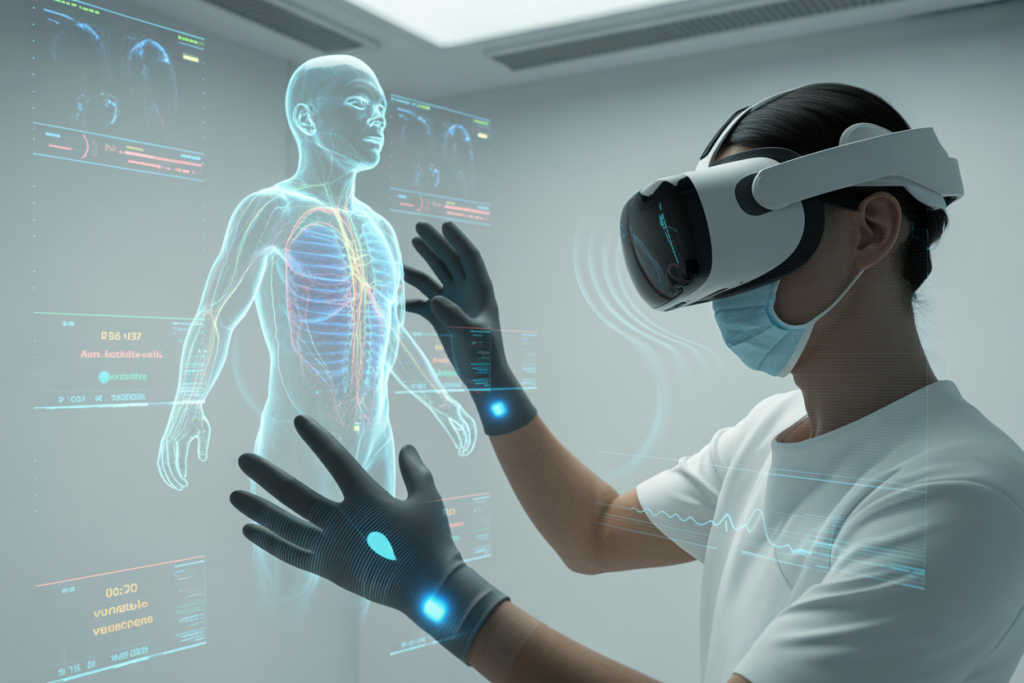
    VR headsets are transforming healthcare through therapy, training, and rehabilitation. In 2024, Oxford University used VR to treat phobias, reducing anxiety symptoms by 68% in patients. Surgeons practice complex procedures in VR simulations, improving success rates. VR also aids physical therapy, with stroke patients using VR games to regain motor skills.

    3. Education and Training

    VR enhances learning by simulating real-world scenarios. In 2025, Stanford’s VR classroom platform allowed students to explore historical events, like the Roman Colosseum, in immersive detail. Corporate training programs use VR for skills like public speaking and hazardous environment response, cutting costs by 20%.

    4. Workplace Collaboration

    VR headsets enable virtual workspaces, with platforms like Spatial and Meta’s Horizon Workrooms hosting 3D meetings. In 2024, Accenture used VR for global team collaboration, reducing travel costs by 15%. MR capabilities allow employees to interact with physical and virtual objects simultaneously.

    5. Fitness and Wellness

    VR fitness apps, like Supernatural and FitXR, combine exercise with immersive environments. In 2025, Peloton launched a VR cycling platform, integrating live classes with virtual landscapes. VR meditation apps, such as Tripp, promote mental health through guided experiences in calming virtual worlds.

    Challenges in VR Headset Development

    1. Technical Limitations

    • Motion Sickness: Latency and low refresh rates cause discomfort, though 120Hz displays have mitigated this.
    • Battery Life: Standalone headsets last 2-3 hours, limiting extended use.
    • Cost: High-end models like Vision Pro ($3,500) remain expensive.

    2. Health and Social Concerns

    Prolonged VR use can cause eye strain, headaches, or disorientation. Social isolation is a concern, as immersive environments may reduce real-world interactions. In 2024, studies linked excessive VR use to reduced attention spans in adolescents, prompting calls for usage guidelines.

    3. Privacy and Security

    VR headsets collect sensitive data, including eye-tracking and biometric information. A 2025 data breach in a VR social platform exposed user movements, raising privacy concerns. Robust encryption and transparent data policies are essential.

    4. Content Ecosystem

    Limited high-quality VR content hinders adoption. Developers face high costs for creating immersive experiences, and fragmentation across platforms complicates app development. Open standards, like OpenXR, are addressing this challenge.

    The Future of VR Headsets

    1. Mainstream Adoption

    By 2030, VR headsets are expected to become as ubiquitous as smartphones, according to Gartner. Affordable models under $200 will drive mass adoption. Integration with AI assistants and 6G connectivity will enhance functionality, making VR a primary computing platform.

    2. Advanced Sensory Integration

    Future VR headsets will incorporate full-body haptics, olfactory feedback, and advanced BCIs. In 2025, a Stanford lab demonstrated a VR glove with scent emitters, simulating smells in virtual environments. These advancements will create hyper-realistic experiences.

    3. Convergence with AR and MR

    VR and AR will merge into extended reality (XR) platforms, with headsets supporting seamless transitions between immersive and augmented modes. By 2035, XR devices could replace laptops and TVs, offering all-in-one solutions for work and entertainment.

    Prediction: By 2030, the VR market is projected to exceed $100 billion, with healthcare and education as key growth sectors, according to IDC.

    Societal Implications

    VR headsets have the potential to:

    • Enhance Accessibility: Provide immersive experiences for people with disabilities, such as virtual travel for mobility-impaired individuals.
    • Drive Economic Growth: Create jobs in VR content creation, hardware design, and software development.
    • Transform Education: Democratize learning through virtual simulations, bridging educational gaps.

    However, equitable access and responsible use are critical to avoid exacerbating digital divides or social isolation. Ethical design and regulation will ensure VR’s benefits are maximized.

    Conclusion

    Virtual Reality headsets are redefining human experiences, from immersive gaming to transformative healthcare and education applications. Advancements in displays, tracking, and AI integration have made VR more accessible and engaging, while mixed reality capabilities bridge virtual and physical worlds. Despite challenges like cost, health concerns, and privacy, the future of VR is promising, with potential to become a cornerstone of daily life. As technology evolves, collaboration between innovators, regulators, and society will ensure VR headsets unlock their full potential responsibly.
  • Augmented Reality Devices: Transforming Perception and Interaction

    Augmented Reality Devices: Transforming Perception and Interaction

    Introduction

    Augmented Reality (AR) devices are revolutionizing how we interact with the world by overlaying digital information onto our physical environment. Unlike virtual reality (VR), which immerses users in a fully digital world, AR enhances reality with real-time data, holograms, and interactive elements. From smart glasses to mobile AR apps, advancements in AR technology are reshaping industries like gaming, healthcare, education, and retail. By 2025, the global AR market is projected to reach $198 billion, according to Statista, driven by breakthroughs in hardware, software, and connectivity. This article explores the latest innovations in AR devices, their applications, challenges, and the future they promise, while addressing societal and ethical implications.

    The Fundamentals of Augmented Reality

    What is Augmented Reality?

    Augmented Reality blends digital content—such as images, text, or 3D models—with the physical world, typically viewed through devices like smartphones, tablets, smart glasses, or headsets. AR devices use cameras, sensors, and displays to track the environment and project digital overlays in real-time. Key components include:

    • Sensors: Cameras, gyroscopes, and accelerometers track user movement and surroundings.
    • Displays: Transparent screens or retinal projectors render digital content.
    • Processing Units: Powerful chips process AR data, often integrated with AI for object recognition.
    • Connectivity: 5G and Wi-Fi enable seamless data streaming for cloud-based AR.

    The Evolution of AR Devices

    AR’s origins trace back to the 1960s with Ivan Sutherland’s head-mounted display, but practical AR emerged in the 2010s with mobile apps like Pokémon GO. By 2025, AR devices have evolved from bulky prototypes to sleek, consumer-friendly wearables. Advancements in optics, AI, and miniaturization have made AR accessible, with companies like Apple, Meta, and Microsoft leading the charge.

    Major Advancements in AR Devices

    1. Next-Generation AR Smart Glasses

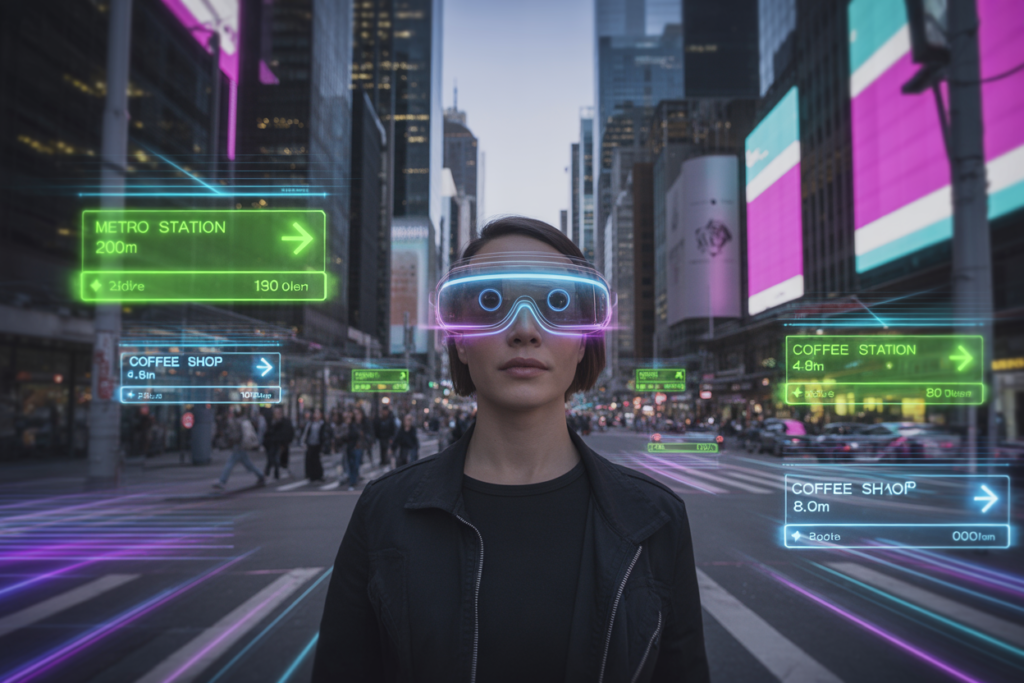
    AR smart glasses are the pinnacle of AR innovation, offering hands-free, immersive experiences. In 2024, Apple’s Vision Pro and Meta’s Orion glasses set new standards with lightweight designs, high-resolution micro-OLED displays, and advanced eye-tracking. These devices integrate spatial computing, allowing users to interact with digital objects via gestures and voice commands. Snap’s Spectacles 5, launched in 2025, introduced AR for social media, enabling real-time filters and holographic avatars.

    Applications:

    • Productivity: AR glasses display virtual desktops, enhancing remote work and multitasking.
    • Gaming: Immersive AR games blend digital characters with real environments.
    • Navigation: Real-time directions and points of interest are overlaid onto the user’s field of view.

    2. Mobile AR and Software Ecosystems

    Smartphones remain the most accessible AR platform, with apps leveraging powerful cameras and processors. In 2025, Google’s ARCore and Apple’s ARKit support advanced features like 3D mapping, occlusion, and motion tracking. Apps like IKEA Place allow users to visualize furniture in their homes, while Snapchat’s AR lenses generate billions of daily interactions. Cloud-based AR, powered by 5G, offloads processing to servers, enabling complex experiences on budget devices.

    Impact:

    • Accessibility: Mobile AR democratizes access, requiring only a smartphone.
    • E-Commerce: Virtual try-ons for clothes, makeup, and furniture boost online sales.
    • Education: AR apps visualize complex concepts, like anatomy or historical events.

    Case Study: In 2024, Walmart integrated AR into its app, allowing customers to preview products in their homes, increasing conversion rates by 20%.

    3. AR Headsets for Enterprise

    AR headsets, like Microsoft’s HoloLens 3 and Magic Leap 2, are designed for industrial and professional use. In 2025, these devices feature wider fields of view (FOV), improved battery life, and AI-driven object recognition. They support complex tasks like remote maintenance, surgical guidance, and architectural design.

    Applications:

    • Manufacturing: AR headsets guide workers through assembly processes, reducing errors by 30%.
    • Healthcare: Surgeons use AR to visualize patient anatomy during procedures.
    • Training: AR simulates hazardous environments for safe, immersive training.

    4. Advances in AR Optics and Displays

    Optical advancements are critical to AR’s evolution. Waveguide optics, used in devices like Nreal Air, create thin, lightweight lenses that project high-resolution images. In 2024, Lumus introduced reflective waveguides with a 50-degree FOV, improving immersion. Retinal projection, explored by Mojo Vision, beams images directly onto the retina, eliminating the need for bulky screens.

    Impact:

    • Comfort: Lightweight optics make AR devices wearable for extended periods.
    • Clarity: High-resolution displays enhance realism and readability.
    • Cost Reduction: Simplified optics lower production costs, making AR more affordable.

    5. Integration with AI and 5G

    AI and 5G are supercharging AR devices. AI enables real-time object recognition, scene understanding, and personalized content. For example, Google’s Visual Positioning System (VPS) uses AI to map environments with centimeter-level accuracy. 5G’s low latency and high bandwidth support cloud-based AR, reducing device processing demands. In 2025, Verizon’s 5G edge network enabled AR training modules for first responders, delivering real-time simulations.

    Applications:

    • Personalization: AI tailors AR content based on user preferences and context.
    • Collaboration: 5G enables multi-user AR experiences, like virtual meetings.
    • Real-Time Analytics: AR devices process live data for sports, retail, and logistics.

    6. Wearable AR Contact Lenses

    Though still experimental, AR contact lenses are an emerging frontier. In 2024, Mojo Vision demonstrated a prototype lens with a micro-LED display, capable of projecting basic information like fitness stats or notifications. These lenses use biosensors to monitor health metrics, integrating seamlessly with wearables.

    Potential:

    • Discreet AR: Lenses offer invisible augmentation, ideal for daily use.
    • Health Monitoring: Real-time data on glucose levels or heart rate.
    • Military Applications: Enhanced situational awareness for soldiers.

    Applications of AR Devices

    1. Gaming and Entertainment

    AR gaming blends digital and physical worlds, creating immersive experiences. Pokémon GO’s success paved the way for titles like Niantic’s Peridot and Microsoft’s Minecraft Earth. In 2025, AR glasses enable multiplayer games where players interact with holographic characters in real environments. AR also enhances live events, with fans using AR apps to view stats or replays during sports matches.

    2. Healthcare

    AR devices are transforming healthcare by improving diagnostics, training, and patient care. Surgeons use AR headsets to overlay CT scans during operations, increasing precision. In 2024, a Stanford hospital used HoloLens 3 for minimally invasive surgeries, reducing recovery times by 15%. AR also supports medical education, allowing students to visualize anatomy in 3D.

    3. Education and Training

    AR enhances learning by making abstract concepts tangible. In 2025, Google’s AR Expeditions app enabled students to explore virtual ecosystems, boosting engagement by 25%. In corporate settings, AR training simulates real-world scenarios, from flight simulations to retail customer service, reducing training costs.

    4. Retail and E-Commerce

    AR revolutionizes shopping by enabling virtual try-ons and product previews. In 2025, Amazon’s AR View app allowed customers to visualize furniture and electronics in their homes, increasing sales by 18%. Beauty brands like L’Oréal use AR for virtual makeup trials, enhancing customer confidence.

    5. Architecture and Design

    Architects use AR to visualize building designs on-site, overlaying 3D models onto physical spaces. In 2024, Autodesk’s AR tools helped architects detect design flaws before construction, saving 10% on project costs. AR also supports interior design, allowing clients to preview decor options.

    Challenges in AR Device Development

    1. Hardware Limitations

    • Battery Life: AR devices require significant power for displays and sensors, limiting usage time. Current glasses offer 4-6 hours of battery life.
    • Form Factor: Bulky designs deter mainstream adoption; lightweight, stylish options are needed.
    • Cost: High-end AR devices like Vision Pro cost $3,500, limiting accessibility.

    2. Privacy and Security

    AR devices collect vast amounts of data, including camera feeds and location information, raising privacy concerns. In 2024, a data breach in an AR app exposed user locations, prompting calls for stricter regulations. Ensuring secure data processing and user consent is critical.

    3. User Experience

    • Motion Sickness: Prolonged AR use can cause discomfort due to latency or FOV limitations.
    • Learning Curve: Complex interfaces may alienate non-tech-savvy users.
    • Content Gaps: Limited AR content hinders adoption; developers need robust ecosystems.

    4. Health and Social Concerns

    Extended AR use may strain eyes or disrupt social interactions. Public skepticism about AR’s impact on mental health, similar to smartphone addiction concerns, persists. Ethical design practices, like limiting screen time, are essential.

    The Future of AR Devices

    1. Mainstream Adoption

    By 2030, AR glasses are expected to replace smartphones as the primary computing platform, according to Gartner. Affordable models under $500 will drive mass adoption. Integration with AI assistants, like an advanced version of Grok, will make AR devices intuitive and indispensable.

    2. Advanced AR Ecosystems

    AR ecosystems will expand with open-source platforms like Unity and Unreal Engine, enabling developers to create diverse applications. Cloud-based AR, powered by 6G, will support seamless, high-fidelity experiences by 2035.

    3. Convergence with Other Technologies

    AR will integrate with AI, IoT, and quantum computing. For example, quantum-enhanced AR could process complex simulations in real-time, while IoT integration will create smart environments where AR devices interact with connected objects.

    Prediction: By 2030, the AR market is projected to exceed $300 billion, with healthcare and gaming as leading sectors, according to PwC.

    Societal Implications

    AR devices have the potential to:

    • Enhance Accessibility: Provide real-time translations and accessibility aids for the visually impaired.
    • Drive Economic Growth: Create jobs in AR development, content creation, and hardware manufacturing.
    • Transform Education: Democratize learning through immersive, interactive experiences.

    However, equitable access is crucial to avoid widening digital divides. Ethical considerations, like data privacy and user well-being, must guide AR’s development.

    Conclusion

    Augmented Reality devices are redefining how we perceive and interact with the world, from smart glasses that enhance productivity to headsets that revolutionize industries. Advancements in optics, AI, and 5G are making AR more immersive and accessible, while applications in gaming, healthcare, and education showcase its versatility. Despite challenges like cost and privacy, the future of AR is bright, promising a seamless blend of digital and physical realities. As technology evolves, collaboration between innovators, regulators, and society will ensure AR’s transformative potential is realized responsibly.

  • 5G Technology Advancements: Powering the Connected Future

    The fifth generation of wireless technology, known as 5G, has emerged as a cornerstone of the digital age, revolutionizing connectivity with unprecedented speed, low latency, and massive device support. Since its commercial rollout began in 2019, 5G has evolved rapidly, with advancements in infrastructure, applications, and integration with emerging technologies like artificial intelligence (AI), the Internet of Things (IoT), and edge computing. These breakthroughs are transforming industries, enhancing user experiences, and laying the foundation for a hyper-connected world. This article explores the latest 5G technology advancements, their applications, challenges, and the future they promise, while addressing societal and ethical implications.

    The Fundamentals of 5G Technology

    What is 5G?

    5G is the latest generation of mobile networks, succeeding 4G LTE. It operates on three key spectrum bands:

    • Low-band: Offers wide coverage but modest speed improvements.
    • Mid-band: Balances speed and coverage, ideal for urban areas.
    • High-band (mmWave): Delivers ultra-fast speeds but limited range, best for dense environments.

    5G’s core features include:

    • High Speeds: Up to 10 Gbps, 100 times faster than 4G.
    • Low Latency: As low as 1 millisecond, enabling real-time applications.
    • Massive Connectivity: Supports up to 1 million devices per square kilometer.
    • Energy Efficiency: Optimized for IoT and battery-powered devices.

    The Evolution of 5G

    The journey to 5G began with research in the early 2010s, driven by the need for faster, more reliable networks to support growing data demands. By 2025, 5G has reached over 2 billion global connections, according to GSMA, with deployments in 95 countries. Advancements in antenna technology, spectrum allocation, and network slicing have accelerated its adoption, making 5G a catalyst for digital transformation.

    Major 5G Technology Advancements

    1. Enhanced Mobile Broadband (eMBB)

    Enhanced Mobile Broadband is a cornerstone of 5G, delivering gigabit-level speeds for applications like 4K/8K streaming, virtual reality (VR), and augmented reality (AR). In 2024, Verizon and AT&T expanded mmWave deployments in urban centers, achieving peak download speeds of 10 Gbps in stadiums and airports. Mid-band spectrum advancements, such as C-band deployments, have improved coverage without sacrificing speed, making eMBB accessible to suburban areas.

    Applications:

    • Streaming and Gaming: 5G enables lag-free cloud gaming and ultra-high-definition video streaming.
    • Immersive Experiences: AR/VR applications, like virtual concerts and interactive training, thrive on 5G’s bandwidth.
    • Smart Cities: High-speed connectivity supports real-time traffic management and public safety systems.

    2. Ultra-Reliable Low-Latency Communications (URLLC)

    URLLC is a game-changer for applications requiring near-instantaneous response times. In 2025, Nokia and Ericsson achieved latency as low as 0.5 milliseconds in industrial settings, enabling mission-critical use cases. Advancements in edge computing integration have further reduced latency by processing data closer to the source.

    Applications:

    • Autonomous Vehicles: 5G’s low latency enables real-time communication between vehicles, infrastructure, and pedestrians, reducing accidents.
    • Remote Surgery: Surgeons use 5G to perform telesurgery with haptic feedback, as demonstrated in a 2024 trial in China.
    • Industrial Automation: Factories leverage URLLC for real-time control of robotic arms and IoT sensors.

    Case Study: In 2025, a German automotive plant used 5G URLLC to synchronize 1,000+ robotic arms, increasing production efficiency by 25%.

    3. Massive Machine-Type Communications (mMTC)

    mMTC enables 5G to connect millions of IoT devices simultaneously, from smart meters to wearable health monitors. Advancements in narrowband IoT (NB-IoT) and LTE-M protocols have improved energy efficiency, allowing devices to operate for years on a single battery. In 2024, Qualcomm’s 5G IoT chipsets reduced power consumption by 40%, expanding mMTC’s reach.

    Applications:

    • Smart Homes: 5G connects thermostats, lights, and appliances for seamless automation.
    • Healthcare: Wearable devices monitor vital signs in real-time, alerting doctors to emergencies.
    • Agriculture: 5G-enabled sensors optimize irrigation and monitor soil health, boosting crop yields.

    4. Network Slicing

    Network slicing allows operators to create virtual networks tailored to specific use cases on a single 5G infrastructure. In 2025, AT&T and Vodafone implemented dynamic network slicing, allocating bandwidth for gaming, enterprise, and public safety. This ensures optimal performance for diverse applications without congestion.

    Impact:

    • Customized Services: Network slices prioritize low latency for autonomous vehicles or high bandwidth for VR streaming.
    • Cost Efficiency: Operators maximize infrastructure use, reducing deployment costs.
    • Public Safety: Dedicated slices ensure uninterrupted communication for first responders during emergencies.

    5. Integration with AI and Edge Computing

    5G’s synergy with AI and edge computing is unlocking new possibilities. AI optimizes network performance by predicting traffic patterns and allocating resources dynamically. Edge computing, supported by 5G’s low latency, processes data locally, reducing reliance on distant cloud servers. In 2024, Google partnered with T-Mobile to deploy AI-driven edge nodes, improving response times for AR applications by 60%.

    Applications:

    • Smart Retail: 5G and AI enable personalized shopping experiences through real-time customer analytics.
    • Industrial IoT: Edge computing processes factory sensor data instantly, improving operational efficiency.
    • Gaming: Cloud gaming platforms like NVIDIA GeForce Now leverage 5G and edge computing for lag-free experiences.

    6. Private 5G Networks

    Private 5G networks, tailored for enterprises, have gained traction in industries like manufacturing, logistics, and healthcare. In 2025, Siemens deployed private 5G networks in 50 factories worldwide, enhancing automation and security. These networks offer dedicated bandwidth, low latency, and enhanced privacy compared to public networks.

    Case Study: A Singapore port used a private 5G network to coordinate autonomous cranes and drones, reducing cargo handling times by 20%.

    Applications of 5G Technology

    1. Healthcare

    5G is transforming healthcare by enabling telemedicine, remote monitoring, and robotic surgery. In 2024, a hospital in South Korea used 5G to stream 8K surgical footage to global experts, facilitating real-time collaboration. Wearable devices powered by 5G monitor chronic conditions, reducing hospital visits by 15% in some regions.

    2. Transportation

    5G supports connected and autonomous vehicles (CAVs) through vehicle-to-everything (V2X) communication. In 2025, Toyota and Qualcomm tested 5G V2X systems, enabling vehicles to share real-time data with infrastructure and other cars, improving road safety. 5G also enhances in-car entertainment with seamless streaming.

    3. Smart Cities

    5G powers smart city initiatives, from traffic management to energy efficiency. In 2024, Singapore’s 5G-enabled smart grid reduced energy waste by 10%. Real-time surveillance and environmental monitoring improve public safety and sustainability.

    4. Entertainment and Media

    5G’s high bandwidth supports immersive experiences like 360-degree live streaming and multiplayer VR gaming. In 2025, the Super Bowl was broadcast in 8K over 5G, with fans using AR apps to view player stats in real-time.

    5. Industry 4.0

    5G drives the fourth industrial revolution by enabling smart factories. In 2025, Bosch used 5G to connect 10,000 IoT devices in a single plant, optimizing production and reducing downtime by 30%. 5G also supports predictive maintenance, identifying equipment issues before failures occur.

    Challenges in 5G Deployment

    1. Infrastructure Costs

    Deploying 5G requires significant investment in base stations, small cells, and fiber optic backhaul. mmWave deployments, in particular, demand dense infrastructure due to their limited range. In 2025, global 5G infrastructure spending reached $50 billion, according to IDC, posing challenges for developing nations.

    2. Spectrum Allocation

    Securing spectrum for 5G is complex, as governments auction limited bands. Regulatory delays and spectrum fragmentation hinder global standardization. Mid-band spectrum, critical for balanced coverage and speed, remains scarce in some regions.

    3. Security and Privacy

    5G’s vast connectivity increases cybersecurity risks. In 2024, a 5G network breach exposed IoT device vulnerabilities, prompting calls for stronger encryption. Privacy concerns arise from the massive data generated by 5G-connected devices, requiring robust regulations like GDPR.

    4. Health and Environmental Concerns

    Public concerns about 5G’s electromagnetic radiation persist, despite studies confirming safety within regulatory limits. Environmental impacts, such as energy consumption from 5G infrastructure, are also under scrutiny, pushing operators to adopt green technologies.

    The Future of 5G Technology

    1. 5G-Advanced and Beyond

    5G-Advanced, expected by 2026, will enhance eMBB, URLLC, and mMTC with features like AI-driven network optimization and extended reality (XR) support. Research into 6G is underway, promising terabit speeds and holographic communication by 2030.

    2. Global Expansion

    By 2030, 5G is projected to cover 85% of the global population, according to Ericsson. Efforts to bridge the digital divide, such as satellite-based 5G, will connect remote areas, fostering inclusive growth.

    3. Integration with Emerging Technologies

    5G will continue to converge with AI, quantum computing, and blockchain. For example, 5G and quantum cryptography could create unhackable networks, while blockchain ensures secure IoT data exchanges.

    Prediction: By 2030, 5G is expected to contribute $1.3 trillion to the global economy, according to PwC, with significant impacts in healthcare, manufacturing, and transportation.

    Societal Implications

    5G’s transformative potential extends beyond technology:

    • Economic Growth: 5G drives innovation, creating jobs in AI, IoT, and network engineering.
    • Accessibility: Affordable 5G could democratize education and healthcare in underserved regions.
    • Sustainability: 5G-enabled smart grids and precision agriculture promote environmental conservation.

    However, equitable deployment is critical to avoid exacerbating digital divides. Governments and industries must prioritize inclusivity and ethical standards.

    Conclusion

    5G technology advancements are reshaping connectivity, enabling a future where autonomous vehicles, smart cities, and immersive experiences are commonplace. From enhanced mobile broadband to private networks, 5G is driving innovation across industries. While challenges like infrastructure costs and security persist, the potential for 5G to transform economies and societies is immense. As we move toward 5G-Advanced and 6G, collaboration between stakeholders will ensure a connected, inclusive, and sustainable future.

  • Quantum Computing Breakthroughs: Redefining the Future of Technology

    Quantum Computing Breakthroughs: Redefining the Future of Technology

    Quantum computing, once a theoretical concept confined to academic papers, is now at the forefront of technological innovation. Unlike classical computers, which process information using bits (0s or 1s), quantum computers leverage the principles of quantum mechanics—superposition, entanglement, and quantum interference—to perform computations at unprecedented speeds. Recent breakthroughs in quantum computing are unlocking new possibilities, from solving complex scientific problems to revolutionizing cryptography and artificial intelligence (AI). This article delves into the latest advancements in quantum computing, their applications, challenges, and the transformative potential they hold, while addressing the ethical and societal implications of this emerging technology.

    The Fundamentals of Quantum Computing

    What is Quantum Computing?

    Quantum computing harnesses the peculiar properties of quantum mechanics to process information. Classical bits are binary, representing either a 0 or a 1, while quantum bits, or qubits, can exist in a superposition of both states simultaneously. This allows quantum computers to explore multiple solutions at once, exponentially increasing computational power for certain problems. Entanglement, another quantum phenomenon, links qubits in ways that enable coordinated behavior, even across vast distances. Quantum interference is used to amplify correct solutions and cancel out incorrect ones.

    The Evolution of Quantum Computing

    The concept of quantum computing was proposed in the 1980s by physicists like Richard Feynman and David Deutsch, who envisioned machines capable of simulating quantum systems. Early progress was slow due to the complexity of building stable quantum systems. However, the 21st century has seen rapid advancements, driven by:

    • Improved Qubit Technologies: From superconducting qubits to trapped ions, researchers have developed more stable and scalable qubit designs.
    • Error Correction: Techniques to mitigate quantum errors have made systems more reliable.
    • Industry Investment: Companies like IBM, Google, Microsoft, and startups like Rigetti and IonQ are pouring billions into quantum research.

    Major Quantum Computing Breakthroughs

    1. Quantum Supremacy and Beyond

    In 2019, Google claimed “quantum supremacy” with its 54-qubit Sycamore processor, solving a problem in 200 seconds that would take a classical supercomputer 10,000 years. While debated, this milestone marked a turning point. In 2023, IBM’s 433-qubit Osprey processor and Google’s advancements in error-corrected quantum chips pushed the boundaries further. These systems demonstrated that quantum computers could outperform classical ones in specific tasks, such as random circuit sampling.

    Applications:

    • Benchmarking Quantum Systems: Supremacy experiments validate quantum hardware for real-world applications.
    • Algorithm Development: These milestones inspire new quantum algorithms for optimization and simulation.

    2. Error Correction and Fault Tolerance

    Quantum systems are notoriously fragile, with qubits susceptible to decoherence—loss of quantum state due to environmental noise. Recent breakthroughs in quantum error correction (QEC) have addressed this challenge. In 2024, Microsoft and Quantinuum developed a logical qubit with error rates 800 times lower than physical qubits, using a technique called “active syndrome extraction.” Google’s surface code approach also showed promise, reducing errors in multi-qubit systems.

    Impact:

    • Scalability: Error correction enables the construction of larger, more reliable quantum computers.
    • Practical Applications: Fault-tolerant systems are critical for industries like cryptography and drug discovery.

    3. Quantum Algorithms and Software

    New quantum algorithms are expanding the scope of quantum computing. Shor’s algorithm (for factoring large numbers) and Grover’s algorithm (for search problems) remain foundational, but recent innovations include:

    • Variational Quantum Eigensolver (VQE): Used for simulating molecular structures in chemistry.
    • Quantum Approximate Optimization Algorithm (QAOA): Solves complex optimization problems in logistics and finance.
    • Quantum Machine Learning: Combines quantum computing with AI to enhance pattern recognition and data analysis.

    In 2025, open-source quantum software frameworks like Qiskit (IBM) and Cirq (Google) have made quantum programming accessible, fostering a global developer community.

    4. Hardware Advancements

    Quantum hardware has seen significant progress:

    • Superconducting Qubits: IBM’s 1,121-qubit Condor processor, launched in 2024, is a milestone in scalability.
    • Trapped Ions: IonQ’s systems achieved record coherence times, enabling longer computations.
    • Photonic Quantum Computing: PsiQuantum’s light-based approach promises scalability with lower cooling requirements.
    • Topological Qubits: Microsoft’s pursuit of topological qubits aims for inherent error resistance.

    Case Study: In 2025, Rigetti Computing deployed a hybrid quantum-classical system, integrating quantum processors with classical supercomputers to solve optimization problems in real-time.

    5. Quantum Networking and Communication

    Quantum communication leverages entanglement for secure data transfer. Breakthroughs include:

    • Quantum Internet: In 2024, researchers in the Netherlands demonstrated a quantum network over 50 kilometers, using entangled qubits to transmit data securely.
    • Quantum Key Distribution (QKD): China’s Micius satellite achieved global QKD, enabling unhackable communication.
    • Quantum Repeaters: Advances in quantum repeaters extend the range of quantum networks by mitigating signal loss.

    Applications:

    • Cybersecurity: Quantum networks promise unbreakable encryption.
    • Distributed Computing: Quantum networks could link quantum computers for collaborative problem-solving.

    Applications of Quantum Computing

    1. Cryptography

    Quantum computers threaten classical encryption methods like RSA, as Shor’s algorithm can factor large numbers exponentially faster. However, they also enable quantum-safe cryptography, such as lattice-based encryption. In 2025, NIST finalized post-quantum cryptography standards, preparing industries for a quantum future.

    2. Drug Discovery and Material Science

    Quantum computers simulate molecular interactions at the quantum level, revolutionizing drug discovery. In 2024, Merck partnered with IBM to use quantum computing for protein folding simulations, reducing drug development timelines by 30%. Quantum simulations also aid in designing advanced materials, such as superconductors and batteries.

    3. Optimization and Logistics

    Quantum algorithms optimize complex systems, from supply chains to financial portfolios. In 2025, D-Wave’s quantum annealers optimized delivery routes for a global logistics firm, cutting costs by 15%. Quantum computing also enhances traffic flow modeling and energy grid management.

    4. Artificial Intelligence and Machine Learning

    Quantum machine learning (QML) accelerates AI tasks like data classification and neural network training. Google’s quantum AI lab reported in 2024 that QML reduced training times for certain models by 50%. This synergy could lead to breakthroughs in natural language processing and computer vision.

    5. Climate Modeling

    Quantum computers model complex climate systems with high precision. In 2025, a collaboration between Oxford University and Quantinuum used quantum simulations to predict carbon sequestration rates, aiding climate change mitigation strategies.

    Challenges in Quantum Computing

    1. Technical Hurdles

    • Decoherence: Qubits lose their quantum state quickly, requiring advanced error correction.
    • Scalability: Building large-scale quantum computers with thousands of stable qubits remains a challenge.
    • Cost: Quantum systems require expensive infrastructure, like cryogenic cooling.

    2. Ethical and Societal Concerns

    • Security Risks: Quantum computers could break current encryption, necessitating a global transition to quantum-safe protocols.
    • Accessibility: High costs and technical complexity may limit access to quantum technology, exacerbating inequalities.
    • Workforce Impact: Quantum computing could automate tasks in fields like finance and logistics, requiring reskilling programs.

    3. Regulatory Gaps

    The rapid pace of quantum development outstrips regulatory frameworks. International standards for quantum cryptography and data privacy are urgently needed to prevent misuse.

    The Future of Quantum Computing

    Toward General-Purpose Quantum Computers

    While current quantum computers are noisy intermediate-scale quantum (NISQ) systems, researchers aim for fault-tolerant, general-purpose quantum computers by 2030. These systems could solve a wide range of problems, from simulating quantum physics to optimizing global economies.

    Quantum-Classical Integration

    Hybrid systems combining quantum and classical computing are gaining traction. In 2025, AWS launched a quantum-classical cloud platform, enabling businesses to experiment with quantum algorithms without owning hardware.

    Global Collaboration

    Quantum computing requires international cooperation. Initiatives like the Quantum Alliance Initiative and the EU’s Quantum Flagship program are fostering collaboration between academia, industry, and governments.

    Prediction: By 2035, quantum computing is expected to contribute $850 billion to the global economy, according to McKinsey, with significant impacts in pharmaceuticals, finance, and cybersecurity.

    Societal Implications

    Quantum computing has the potential to:

    • Accelerate Innovation: Solve problems previously deemed unsolvable, from curing diseases to designing sustainable energy systems.
    • Reshape Industries: Transform sectors like finance, healthcare, and logistics through optimization and simulation.
    • Bridge Gaps: Democratize access to advanced tools, provided governments and industries prioritize equitable distribution.

    However, ensuring ethical development and deployment is critical. Public education and transparent governance will help mitigate risks and maximize benefits.

    Conclusion

    Quantum computing breakthroughs are ushering in a new era of technology, with the potential to solve humanity’s most pressing challenges. From achieving quantum supremacy to building quantum networks, recent advancements demonstrate the field’s rapid progress. While technical, ethical, and societal challenges remain, the promise of quantum computing is undeniable. As researchers, companies, and policymakers collaborate, quantum technology will redefine industries and shape a future where the impossible becomes possible.

  • Artificial Intelligence Innovations: Shaping the Future

    Artificial Intelligence (AI) has transitioned from a niche field of computer science to a transformative force reshaping industries, economies, and societies. Over the past decade, AI innovations have accelerated at an unprecedented pace, driven by advancements in computing power, vast data availability, and breakthroughs in algorithms. From healthcare to transportation, education to entertainment, AI is revolutionizing how we live, work, and interact with the world. This article explores the latest AI innovations, their applications, challenges, and the future they promise, while addressing their societal and ethical implications.
    The Evolution of AI
    AI’s roots trace back to the 1950s, when pioneers like Alan Turing proposed machines that could mimic human intelligence. Early AI systems were rule-based, limited by computational constraints and a lack of data. The 21st century, however, marked a turning point with the advent of machine learning (ML), a subset of AI that enables systems to learn from data without explicit programming. The introduction of deep learning, powered by neural networks, further accelerated AI’s capabilities, enabling machines to process complex patterns in images, text, and sound.
    Today, AI innovations are driven by:

    Big Data: The exponential growth of data from social media, IoT devices, and digital platforms provides the raw material for AI systems.
    Computing Power: GPUs and TPUs have enabled faster processing of complex algorithms.
    Algorithmic Advancements: Techniques like reinforcement learning, generative adversarial networks (GANs), and transformer models have expanded AI’s potential.

    Key AI Innovations
    AI is no longer confined to research labs; it’s embedded in everyday technologies. Below are some of the most impactful AI innovations shaping the present and future.

    1. Generative AI and Creative Applications
      Generative AI, which creates new content such as text, images, music, or videos, has seen remarkable progress. Models like OpenAI’s GPT-4, DALL·E 3, and Stable Diffusion have democratized creativity. These systems can:

    Write human-like text for articles, stories, or code.
    Generate photorealistic images from text prompts.
    Compose music or design virtual environments.

    Applications:

    Content Creation: Marketers use AI to generate ad copy, social media posts, and personalized emails.
    Entertainment: AI-generated art and music are featured in galleries and streaming platforms.
    Design: Architects and product designers use AI to create prototypes and visualizations.

    Example: In 2024, AI-generated short films won awards at independent film festivals, showcasing the creative potential of tools like Runway ML.

    1. AI in Healthcare
      AI is transforming healthcare by improving diagnostics, treatment, and operational efficiency. Key innovations include:

    Medical Imaging: AI algorithms analyze X-rays, MRIs, and CT scans with accuracy rivaling or surpassing human radiologists. Google’s DeepMind, for instance, detects diabetic retinopathy with high precision.
    Drug Discovery: AI accelerates drug development by predicting molecular interactions. AlphaFold by DeepMind solved protein folding, a decades-old biological puzzle, in 2020, paving the way for faster drug design.
    Personalized Medicine: AI tailors treatments based on a patient’s genetic makeup, improving outcomes for conditions like cancer.

    Case Study: In 2025, AI-powered wearables monitor vital signs in real-time, alerting doctors to anomalies before they become critical, reducing hospital readmissions by 20% in some regions.

    1. Autonomous Systems
      AI is at the heart of autonomous vehicles, drones, and robotics. These systems rely on computer vision, sensor fusion, and reinforcement learning to navigate complex environments.

    Self-Driving Cars: Companies like Tesla, Waymo, and Cruise are deploying Level 4 autonomous vehicles in urban areas. These cars use AI to process data from LIDAR, cameras, and radar to make real-time driving decisions.
    Drones: AI-powered drones are used for delivery, agriculture, and surveillance. Amazon’s Prime Air, for example, aims to deliver packages in under 30 minutes using AI-optimized flight paths.
    Robotics: AI enables robots to perform tasks like warehouse automation, surgical assistance, and elderly care. Boston Dynamics’ Spot robot uses AI to navigate uneven terrain for industrial inspections.

    Impact: Autonomous systems are projected to reduce traffic accidents by 90% by 2035, as AI eliminates human error in driving.

    1. Natural Language Processing (NLP)
      NLP has evolved from basic chatbots to sophisticated systems capable of understanding context, sentiment, and intent. Innovations include:

    Conversational AI: Systems like Grok (developed by xAI) and Google’s Gemini engage in human-like conversations, answering complex queries and assisting with tasks.
    Language Translation: Real-time, context-aware translation tools like DeepL break down language barriers in global communication.
    Sentiment Analysis: Businesses use NLP to analyze customer feedback, improving products and services.

    Example: In 2025, AI-powered virtual assistants handle 70% of customer service inquiries in industries like retail and banking, reducing costs and improving response times.

    1. AI in Education
      AI is personalizing education, making learning accessible and tailored to individual needs.

    Adaptive Learning Platforms: Tools like Duolingo and Khan Academy use AI to adjust lessons based on a student’s progress.
    Automated Grading: AI systems evaluate essays and exams, providing instant feedback to students and teachers.
    Virtual Tutors: AI tutors offer 24/7 support, helping students with subjects like math and science.

    Impact: AI-driven education platforms have increased student engagement by 30% in underserved communities, bridging educational gaps.

    1. AI for Sustainability
      AI is tackling climate change by optimizing energy use and supporting environmental conservation.

    Energy Management: AI optimizes power grids, reducing energy waste. Google’s DeepMind reduced data center cooling costs by 40% using AI.
    Agriculture: AI-powered precision farming analyzes soil, weather, and crop data to maximize yields while minimizing resources.
    Wildlife Conservation: AI monitors endangered species through drones and cameras, helping prevent poaching.

    Case Study: In 2024, AI models predicted drought patterns in sub-Saharan Africa, enabling preemptive food distribution and saving thousands of lives.

    1. AI in Cybersecurity
      As cyber threats grow, AI is bolstering defenses.

    Threat Detection: AI identifies anomalies in network traffic, detecting malware and phishing attempts in real-time.
    Automated Response: AI systems neutralize threats faster than human analysts, minimizing damage.
    Fraud Prevention: Banks use AI to detect fraudulent transactions with 95% accuracy.

    Example: In 2025, AI-driven cybersecurity platforms thwarted a global ransomware attack, saving businesses an estimated $10 billion.
    Challenges and Ethical Considerations
    While AI innovations offer immense potential, they come with challenges:

    Bias and Fairness: AI systems can inherit biases from training data, leading to unfair outcomes in hiring, policing, and lending. Efforts to develop fair AI models are ongoing but complex.
    Privacy: AI’s reliance on vast datasets raises concerns about data security and user consent. Regulations like GDPR and CCPA aim to address these issues.
    Job Displacement: Automation may displace workers in industries like manufacturing and customer service. Reskilling programs are critical to mitigate this impact.
    AI Safety: Ensuring AI systems are safe and controllable is a priority, especially as they become more autonomous. Researchers are exploring “explainable AI” to make decisions transparent.
    Ethical Use: The potential for AI in surveillance, deepfakes, and autonomous weapons raises ethical dilemmas. International frameworks are needed to govern AI deployment.

    The Future of AI Innovations
    The next decade will see AI become even more integrated into daily life. Emerging trends include:

    General AI (AGI): Unlike narrow AI, which excels at specific tasks, AGI aims to replicate human-like intelligence across domains. While still theoretical, companies like xAI are working toward this goal.
    AI-Human Collaboration: AI will augment human capabilities, enabling professionals to focus on creative and strategic tasks.
    Edge AI: Running AI models on devices like smartphones and IoT sensors will reduce latency and enhance privacy.
    Quantum AI: Quantum computing could exponentially increase AI’s processing power, solving problems currently deemed intractable.

    Prediction: By 2030, AI is expected to contribute $15.7 trillion to the global economy, according to PwC, with healthcare and manufacturing seeing the largest gains.
    Societal Implications
    AI’s transformative power extends beyond technology. It has the potential to:

    Reduce Inequality: AI can democratize access to education, healthcare, and financial services.
    Enhance Creativity: By automating routine tasks, AI frees humans to focus on innovation.
    Reshape Work: New roles like AI ethicists and data curators will emerge, while traditional jobs evolve.

    However, ensuring equitable access to AI benefits is crucial. Developing nations must be included in the AI revolution to avoid widening global disparities.
    Conclusion
    AI innovations are redefining the boundaries of what’s possible, from creating art to curing diseases and combating climate change. While challenges like bias, privacy, and job displacement persist, the potential for AI to solve humanity’s greatest problems is immense. As we move toward a future where AI is ubiquitous, collaboration between technologists, policymakers, and society will be essential to harness its power responsibly. The journey of AI is just beginning, and its next chapter promises to be even more revolutionary.